Reviewed · WALKING TOURS
Hamburg: Guided Walking Tour in Danish
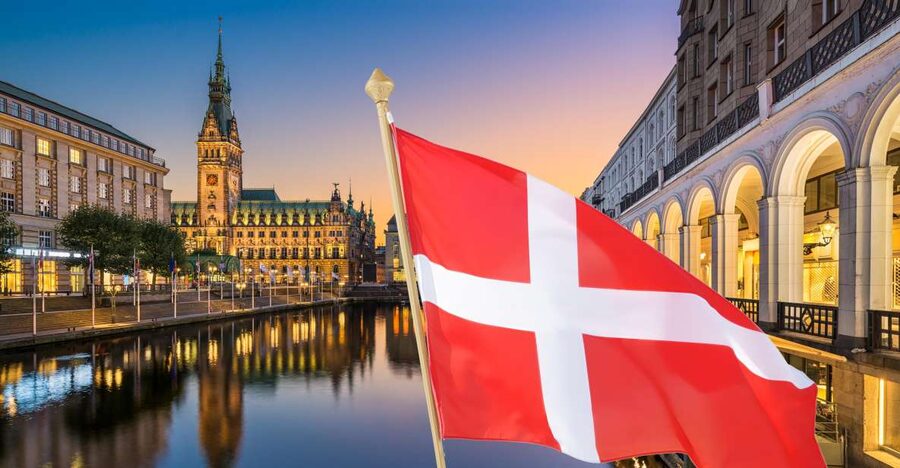
Hamburg is one of those cities where you can feel the centuries in the streets, not just in museums. This Danish walking tour threads together old town landmarks, the warehouse district, and the modern harbor, so the city makes sense as a single story. You’ll walk the center at an easy pace, guided in Danish the whole way.
I love two things here. First, you get a licensed guide who explains the why, not just the what, and the Danish delivery makes the stories land fast. Second, the route is smart: you go from the Townhall and the St. Nikolai Memorial to Speicherstadt and then finish in HafenCity at the Elbphilharmonie Plaza, so you end with real payoff in views.
One consideration: this is a walking tour that runs rain or shine, and it is not designed for people with mobility impairments or wheelchair users. Wear comfortable shoes, and if you get cold easily, plan for it.
Key Highlights You’ll Feel on the Walk
- Danish-language guidance that keeps the history easy to follow
- 1200-year Hamburg timeline, from Saxon marketplace to today’s port power
- St. Nikolai Memorial and WWII-era context tied to the city’s development
- Speicherstadt, the world’s largest warehouse district, seen on foot
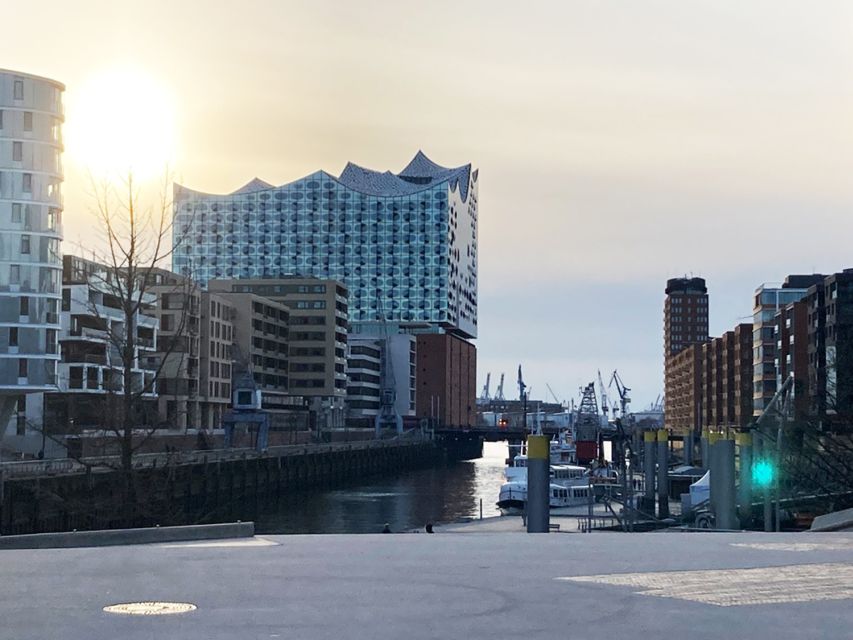
- HafenCity and Elbphilharmonie capped with time at the Plaza and public viewing platform
- A guided route that stays focused, with short, timed stops so you do not wander
Why a Danish Guide Turns Hamburg Into a Story
Hamburg can feel split into sections if you visit on your own. One part looks medieval, another part looks rebuilt, and then you hit the port. This tour’s big value is that it connects those parts with a clear narrative in Danish.
You’ll start with the city’s origins as a Saxon marketplace and then follow how Hamburg became a leading member of the Hanseatic League. From there, the guide ties in why Hamburg’s development stayed shaped by trade, port life, and the very practical realities of a large city near water.
I also like the way the tour answers questions you might have before you even ask them. The guide talks about how fire mattered in Hamburg’s development, and it also explains why Hamburg’s Old Town is actually quite new. Those details make the streets feel less random.
Finally, you are not just doing sightseeing. You are doing meaning. You will hear historical stories while you pass real places, including the Townhall, the St. Nikolai Memorial, Speicherstadt, and HafenCity, and you end where the city shows off its modern side.
More walking tours in Hamburg:
- Hamburg: Guided Walking Tour for Magic Fans
★ 4.8 · 1,992 reviews - Reeperbahn Walking Tour with St. Pauli Local
★ 4.8 · 577 reviews - Hamburg: Speicherstadt Walking Tour with Coffee Tasting
★ 4.6 · 360 reviews
Walking From Swatch Jungfernstieg to Hamburg’s Townhall
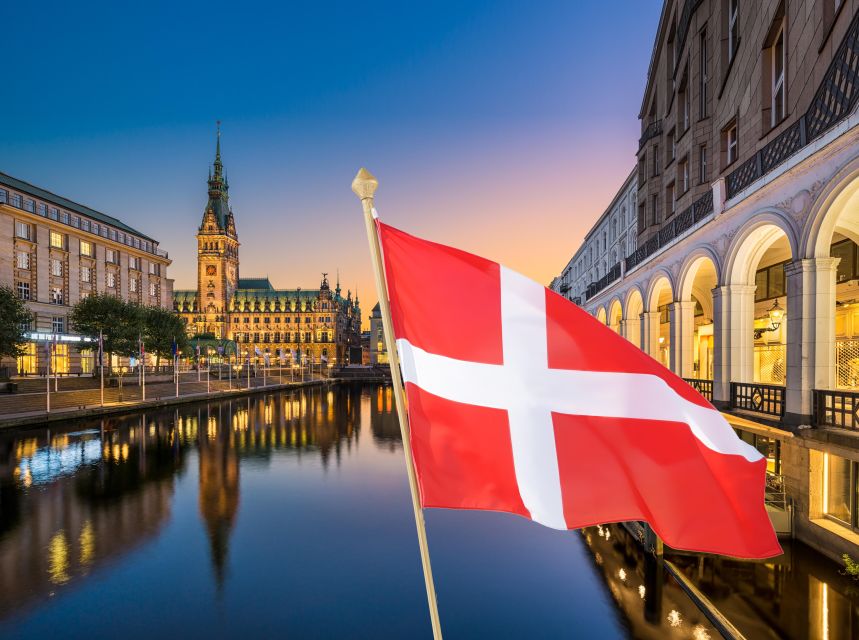
Your tour starts in front of the Swatch Shop at the corner of Jungfernstieg and Alsterarkaden. That spot is a good “anchor” because you immediately get your bearings in the city center near the water. Even before you reach the main sights, you are positioned where Hamburg feels active and easy to navigate.
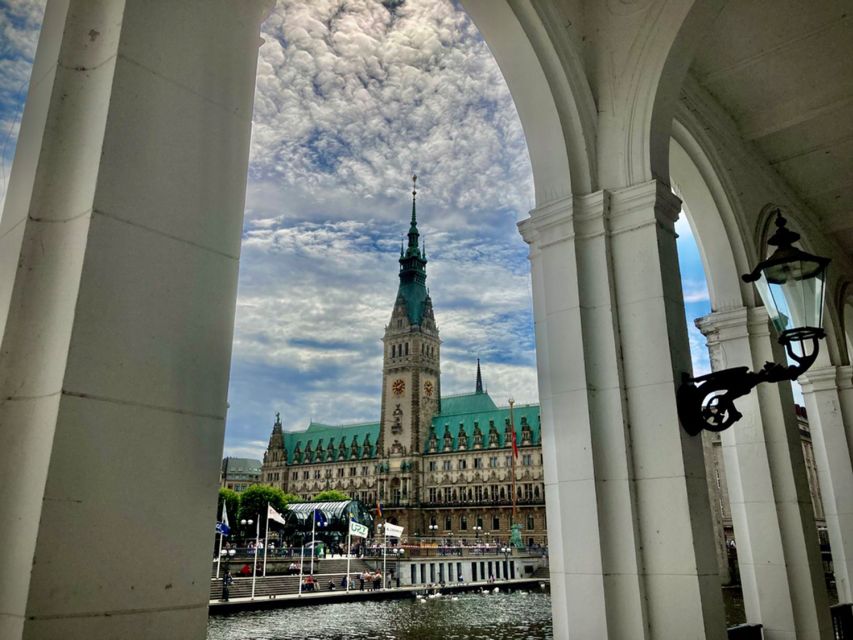
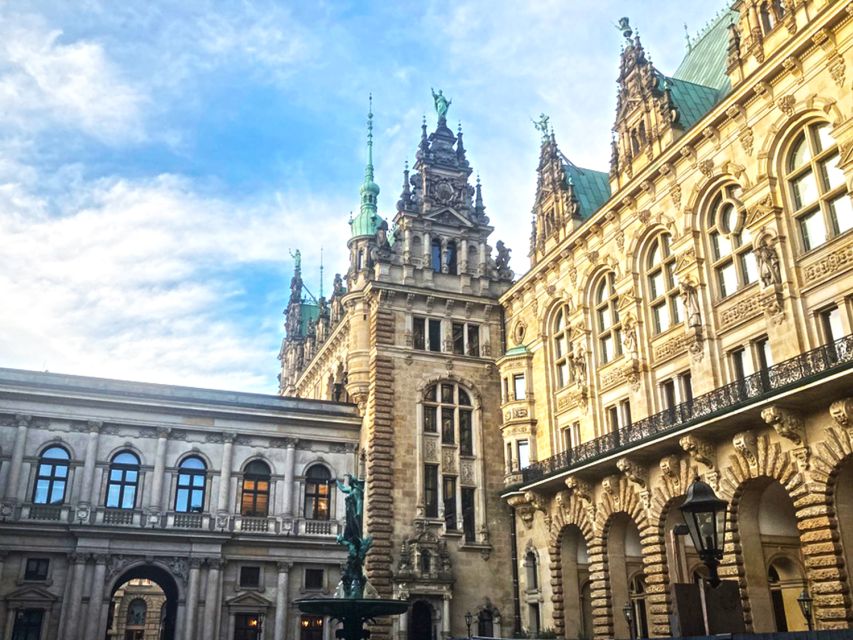
From there, you head to Hamburg’s Townhall for a guided stop. This is not just a quick stare-and-go. The Townhall visit is about understanding what the city chose to represent as it grew. You get a guided look for about 20 minutes, which is long enough to absorb details without feeling stuck in one place.
Next comes Deichstraße for about 15 minutes. This is the kind of street stop that works well on a walking tour, because you can see how the city’s layout supports daily movement. It also gives the guide room to connect Hamburg’s growth to its geography and port identity.
You then pass the Patriotic Society of 1765 for about 10 minutes. Short stops like this are often where you learn the little civic details that make a place feel lived in. Even if you only catch a few facts, they help you read what you see later.
The key to enjoying this section is pacing. The tour is designed around short segments, roughly matching the time you spend learning versus the time you spend walking. You will still move steadily, but you will not be forced into long stretches with no context.
St. Nikolai Memorial, WWII Context, and Why Fire Shaped the City
The St. Nikolai Memorial stop is one of the emotional anchors of the entire walk. You’ll spend about 15 minutes there, focused on the church ruins of St. Nikolai, which were bombed by Allied forces during Operation Gomorrah in 1943. Today, the memorial houses a WWII memorial and museum, and the guide uses that to explain how the city’s story kept evolving under pressure.
This is also where the tour’s “why” becomes most useful. Hamburg is often described through commerce and the port, but the city’s turning points include destruction and rebuilding. Hearing this in Danish makes it easier to keep the timeline straight, especially if you are not fluent in German.
The guide also addresses why fire played an important role in Hamburg’s development. That theme matters because it explains why cities develop rules, architecture choices, and rebuilding habits over time. Even as you stand in a specific spot tied to a specific event, you are learning the bigger pattern.
Then you continue on toward Laeiszhof for about 15 minutes. Stops like this are what turn a list of famous sites into an actual route. You get a little more local texture before you jump into the warehouses of Speicherstadt.
A practical note: this part of the tour can feel colder and more exposed, especially if you start in cool months. The tour takes place rain or shine, so dress for the weather first, then let the guide do the rest. The route is short enough that you are not stuck out for hours in bad conditions.
Patriotic Society of 1765 and Laeiszhof, The Stops That Add Texture
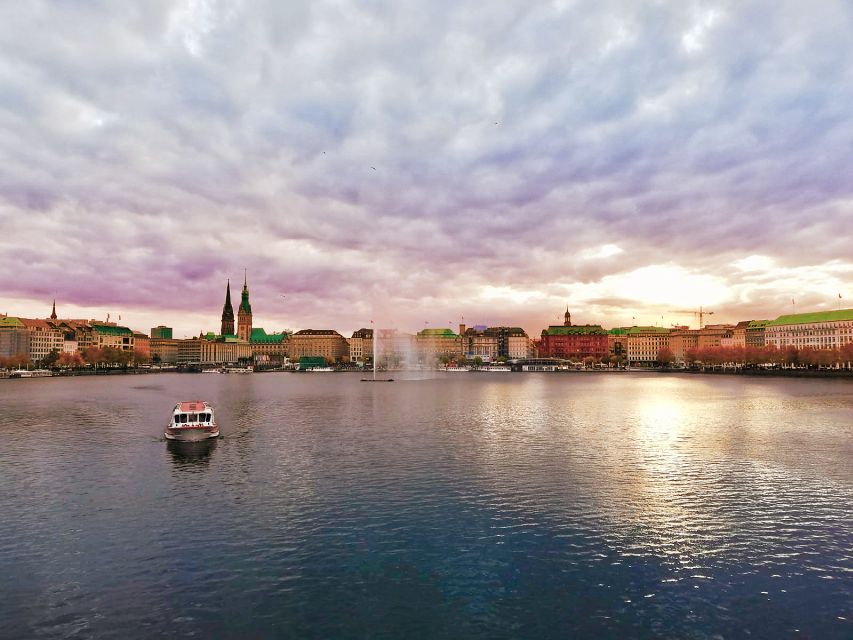
Not every tour can balance landmark intensity with smaller, meaningful stops. This one does, and it makes the city feel more complete.
The Patriotic Society of 1765 is quick, around 10 minutes, but it gives you a named thread to follow. You learn that Hamburg’s identity is not just merchant math and ship schedules. There is also a civic culture, and you can sense it in how the city marks its public life.
Laeiszhof follows for about 15 minutes. Even though it is not described like the Townhall or the St. Nikolai Memorial, it matters because it helps you move through Hamburg as a real place. You get a sense of how space is used, how pedestrians move, and how the city’s layers stack together.
I like that these stops are not treated like filler. They are placed so you can digest the heavier history before you hit Speicherstadt. That keeps the tour from feeling one-note: you get solemn context, then you get architectural and port context.
If you are the type who enjoys detail, this is a tour that rewards attention. If you mainly want photos, it still works, but you will get more out of it if you listen. The Danish guide style seems to stick to clear explanation, and that makes the shorter stops count.
More Hamburg days worth comparing
- Hamburg: Elbphilharmonie Plaza Guided Tour
★ 4.7 · 5,882 reviews - Hamburg: Chocoversum Guided Tour with Tastings
★ 4.7 · 2,443 reviews - Hamburg: St. Pauli Highlights Guided Tour with Beer for 18+
★ 4.7 · 2,353 reviews - Hamburg: Speicherstadt and Hafencity Guided Tour
★ 4.7 · 1,344 reviews
Speicherstadt, the World’s Largest Warehouse District on Foot
Then the tour shifts gears into pure port-era architecture: Speicherstadt. You spend about 15 minutes here on foot, and it is not just about looking at old buildings. The guide explains why this warehouse district exists and how it fits the logic of a major port city.
Speicherstadt is described as the world’s largest warehouse district, and that fact alone gets your attention. But the real value is seeing it as part of Hamburg’s development story. This is where trade becomes physical space, built for storage, handling, and the constant flow tied to shipping.
On a walking tour, warehouse districts can either feel like a pretty backdrop or a useful lesson. Here, it leans toward the useful lesson. You get context around how Hamburg grew into one of the world’s largest ports, and Speicherstadt becomes the visual proof.
Also, this is a great stop for your camera, because the district has a strong look and consistent character. That means you can capture details without constantly searching for new angles.
If you are sensitive to crowds or tight sidewalks, just keep expectations realistic. This is a popular area, and you will be walking with the group. Still, the stop is timed well, and you are not trapped in long waiting moments.
By the time you leave Speicherstadt, HafenCity is next, and you will feel the contrast.
HafenCity and the Elbphilharmonie Plaza Finale
HafenCity is the tour’s modern counterweight. You spend about 15 minutes moving through it, with the guide explaining Hamburg’s residential and business district side. It helps you see how the port city did not stop at warehouses and old markets. It kept reinventing how people live and work near the harbor.
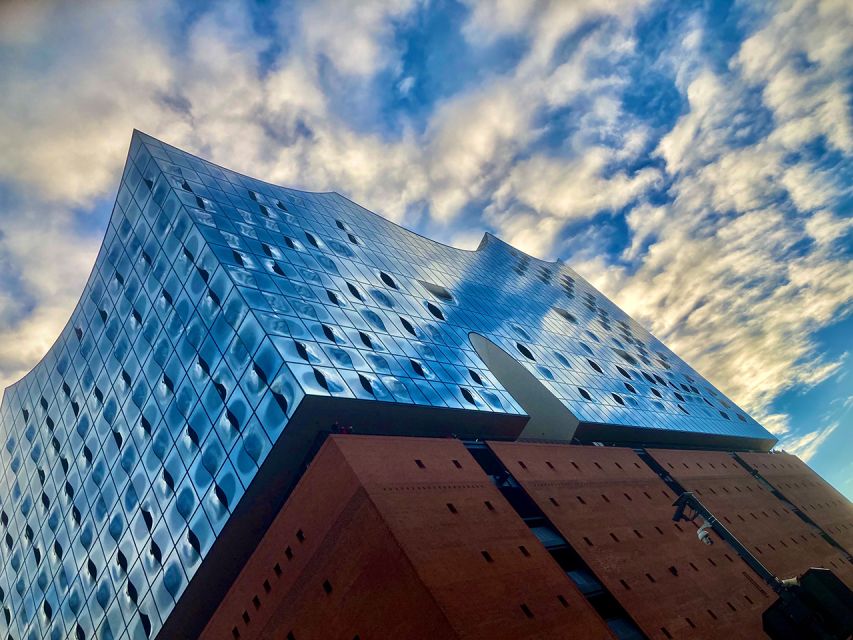
Then you reach the Elbphilharmonie area for a final guided stop of about 15 minutes. The Elbphilharmonie is a grand concert hall, and the tour treats it as a highlight for a reason: it is one of Hamburg’s big “we made it” symbols.
What I like is how the tour ends. After the guided portion, you finish at Platz d. Deutschen Einheit, and you get the ideal opportunity to explore the Elbphilharmonie Plaza and the public viewing platform on your own. That means the guide can handle the story, and you can handle the photos and the lingering views.
This finale is the best moment to slow down. Look out, take your time, and compare what you heard earlier in the walk. Hamburg’s history showed fire, rebuilding, the Hanseatic League era, and the port economy. HafenCity and the Elbphilharmonie give you the modern “answer” to all of that.
If the weather is good, this ending becomes even more rewarding, because you can actually use the public viewing platform. If it is gloomy, you still get value from the architecture and the chance to step back from the street-level rush.
Price and Practical Tips for a 2-Hour Danish Tour
The price is $280 per group for up to 30 people, and the tour lasts 2 hours. That grouping matters for value. A per-group price is often easier on a family or a small group than per-person pricing, especially if you are traveling with friends.
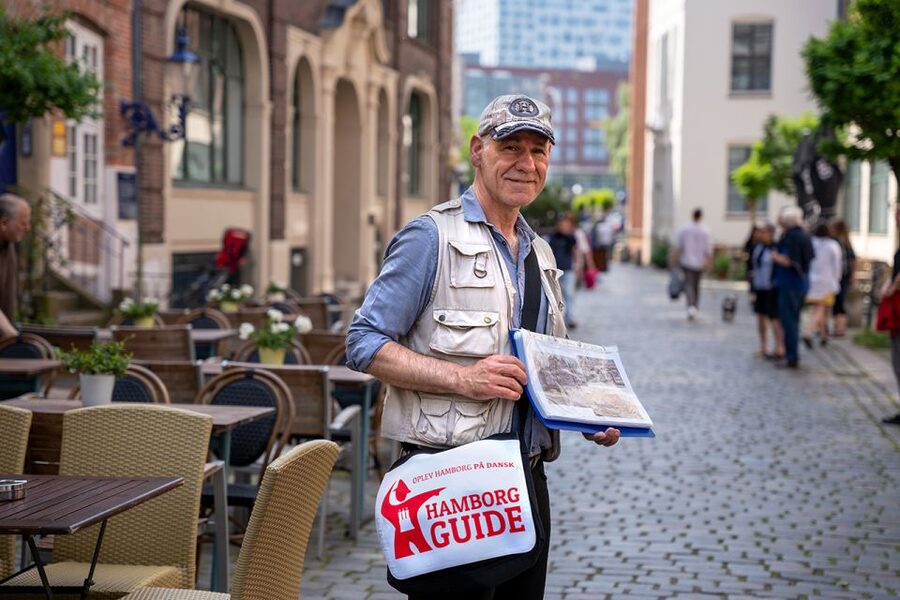
You are also paying for a licensed guide plus historical visual aids. Those aids may sound minor, but they matter for complex topics like how fire influenced development or how WWII events shape what stands today. The guide coverage is basically your “translation layer” for Hamburg’s long timeline.
The reviews I’ve taken into account strongly emphasize the guide’s command of history and culture, plus the way the Danish narration stays organized and easy to follow. One name that comes through clearly is Christian Meyer-Pedersen, described with major knowledge and a lively, arranged style. That kind of guide presence is what turns 2 hours from a sightseeing walk into a real city lesson.
A couple practical points so you are comfortable. Bring cash, wear comfortable shoes, and dress in comfortable clothes since it runs rain or shine. You should also assume you will stand and walk for most of the 2 hours, not sit in a vehicle.
Food and drinks are not included, so plan a snack stop before or after. With this route, you can easily pair it with a later meal in the center, but you do not want to be hunting for a restaurant during the tour.
Finally, if Danish is important to you, this tour is a straightforward choice. The guide is live and the language is Danish, so it is designed for people who want the story without struggling through German explanations.
Should You Book This Danish Hamburg Tour?
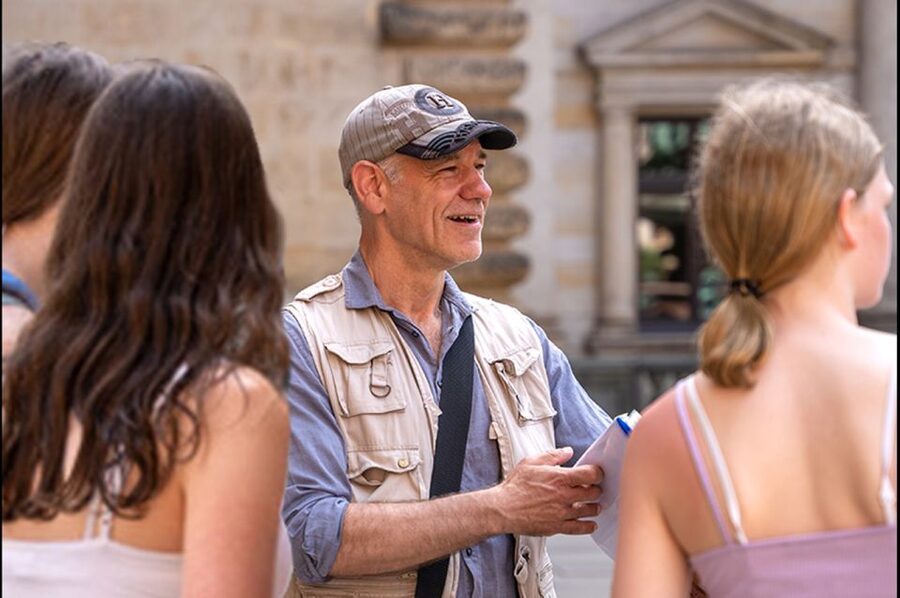
Book it if you want Hamburg to make sense in a short time, and if Danish guidance is a must for you. This route covers exactly the kind of arc you would want on a first serious visit: origins in the marketplace era, Hanseatic growth, the Townhall, St. Nikolai’s WWII memorial context, Speicherstadt warehouses, and then HafenCity and the Elbphilharmonie finale.
Skip it if your group has mobility needs that prevent walking, because the tour is not suitable for wheelchair users, people with mobility impairments, or people who are hearing-impaired or visually impaired. Also skip it if you cannot handle a 2-hour rain-or-shine outdoor experience.
If you do book, go with a simple plan. Wear warm layers, bring cash, and give yourself time at the end to explore the Elbphilharmonie Plaza and viewing platform. The guide gives you the story, and the ending lets you watch Hamburg answer back in real time.
FAQ
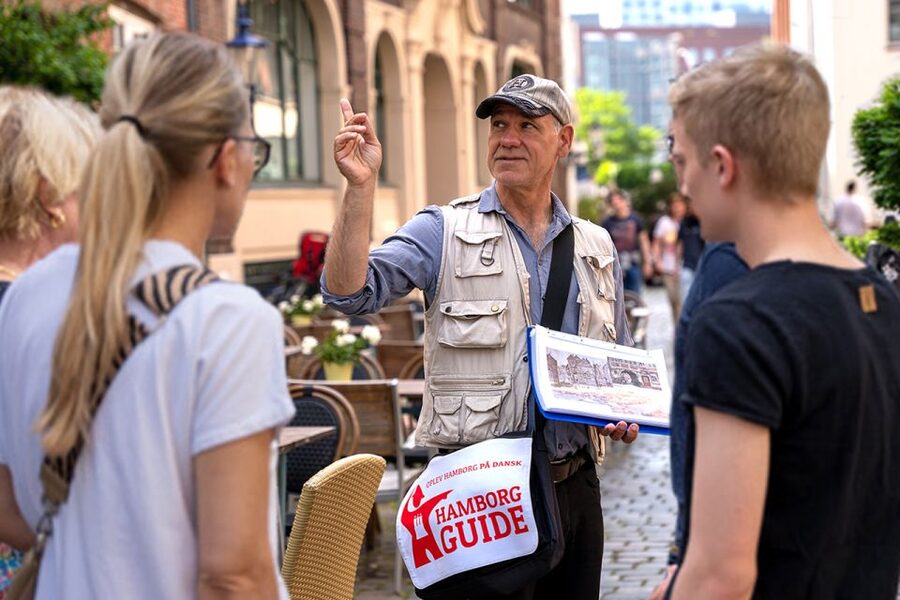
How long is the Hamburg guided walking tour in Danish?
The tour lasts 2 hours.
Where do I meet the guide?
Meet your guide in front of the Swatch Shop at the corner of Jungfernstieg and Alsterarkaden.
What language is the tour guide speaking?
The live tour guide speaks Danish.
What will we see during the walk?
You’ll pass several key sights, including Hamburg Townhall, the St. Nikolai Memorial, Speicherstadt, HafenCity, and the Elbphilharmonie area.
What is the price and group size?
The price is $280 per group, up to 30 people.
Does the tour run in bad weather?
Yes. The tour takes place rain or shine.
What should I bring?
Bring comfortable shoes and comfortable clothes. Cash is also recommended. Food and drinks are not included.
Recently added around Hamburg
- Hamburg Private Food Tours with a Local: 100% Personalized★ 5.0 · 3 reviews
- The Beatles on St. Pauli★ 5.0 · 3 reviews
- Short walk St. Pauli – the St. Pauli quickie★ 5.0 · 3 reviews
- Private Tour: Hamburg St Pauli Nightlife District★ 3.5 · 3 reviews
- Private Tour: Speicherstadt and HafenCity Walking Tour in Hamburg★ 5.0 · 4 reviews
- Hamburg: Safari Tour in St. Pauli★ 5.0 · 3 reviews
- Private Hamburg rickshaw tour for 2 people★ 5.0 · 3 reviews
- Hamburg Like a Local: Private and Personalized Experience (3hrs)★ 5.0 · 3 reviews
Walking Tours, compared.

English Hamburg City Center Pay-What-You-Want Walking Tour
Read our review →