
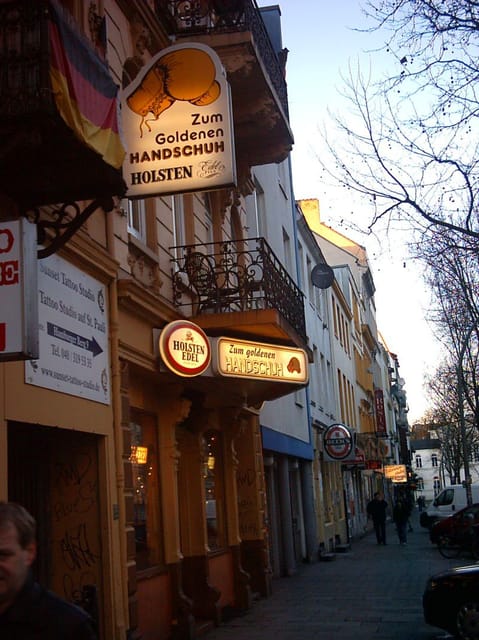
Reviewed · GHOST & NIGHT WATCHMAN TOURS
CSI St. Pauli – Crime Scene St. Pauli
CSI St. Pauli is interesting because it puts a spotlight on the darker side of Hamburg’s entertainment district, St. Pauli, with a guided walk through the places where crime, policing, and street life collided. It is not a ghost-story vibe. It is more like walking through a paper trail, where each stop connects to how authorities and communities handled trouble.
I love two things right away: the tour’s focus on a specific case, the murders tied to Werner Mucki Pinzner, and the way it traces how prostitution evolved over time. If you like straight, topic-driven tours, this one stays on message and keeps turning history into something you can picture.
One possible drawback to plan around is that the experience depends on your guide’s pacing and language clarity. Since it runs in any weather and follows a walking route, you will want comfortable shoes and a little flexibility if you are trying to fit it between other plans.
Key things you will notice on this CSI St. Pauli walk
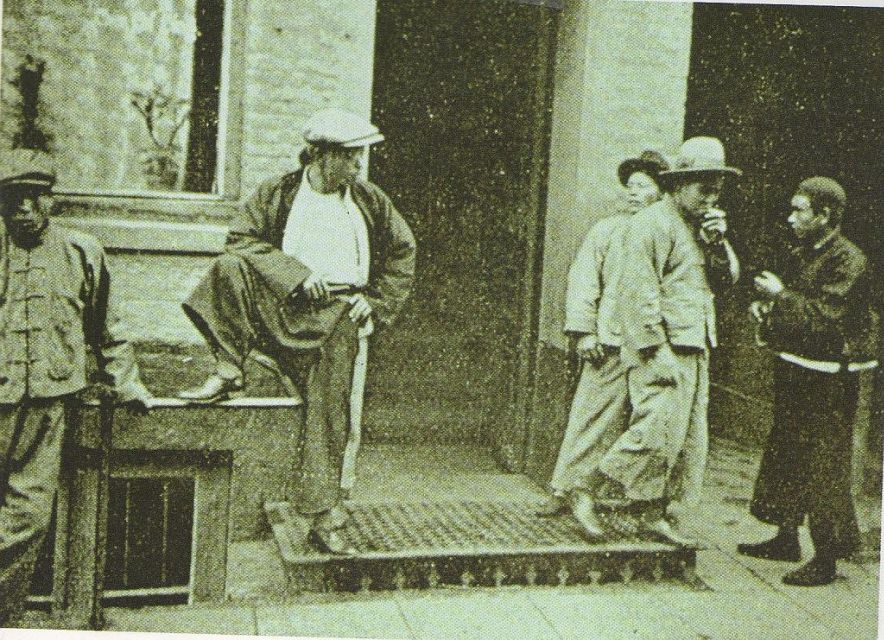
- Crime and law and order in St. Pauli as it changed from World War I onward to around 1990
- Mucki Pinzner’s murder case explained as part of the larger street-crime story
- Spartacus League raids along the Reeperbahn discussed as infamous events tied to the district
- Prostitution then and now with attention to how pimps tried to stay under the radar
- Crime-scene style stops including locations tied to local gangs
- A private group feel that can make the 90 minutes feel more personal
What CSI St. Pauli is really about, crime from WWI to around 1990
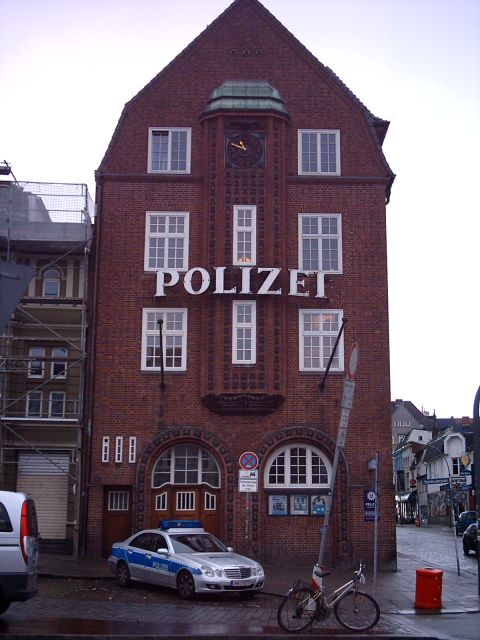
This tour is built around the idea that crime is not just crime. The definition changes with the era, the politics, and who is doing the accusing. In St. Pauli, that played out through changing attitudes toward policing, street gangs, and sex work, then and later.
You are guided through the district with the emphasis on the way authorities pursued people and the way the streets fought back or adapted. The tour framing spans from the First World War era until about 1990, with famous cases included to anchor the story.
If you expect a light stroll with general sightseeing, this is not that. You should expect a topic-heavy, sometimes grim, but structured walk. It is also grounded in specific names and events rather than vague atmosphere.
More night watchman and ghost tours:
- Hamburg: Night Watchman’s Tour of St. Pauli in German
★ 4.7 · 4,818 reviews - Hamburg: Eerie Speicherstadt Tour
★ 4.5 · 1,394 reviews - Hamburg: Crimes of St. Pauli Guided Walking Tour
★ 4.6 · 265 reviews
Starting at Millerntorplatz, and setting expectations for a 90-minute route
You begin at Millerntorplatz 1, Hamburg, right by Five Guys. That starting point matters because it gives you an easy reference. It is also a practical zone for meeting, especially if you are arriving by transit and want to get oriented quickly.
The tour runs 90 minutes, so you should mentally treat it as a focused hit, not a half-day deep dive. You will move between several stops, with the guide pausing to explain context, names, and what happened there. That pacing is one reason comfortable shoes matter.
Because it takes place in any weather, you are essentially signing up for a walking history lesson. Plan for a drizzle plan, not a museum plan. If you are the type who hates wind and wet cobblestones, bring what you need early.
The Reeperbahn story: Spartacus League raids and what made them infamous
One of the tour’s central threads is the Spartacus League and their raids along the Reeperbahn. You are not just hearing that raids happened. You get the sense of why the area mattered, how the entertainment economy worked, and why certain groups targeted the place.
This is where the tour gets vivid in a practical way. Even if you have never studied Hamburg street politics before, you can understand the basics fast: the Reeperbahn was a hotspot for attention, money, and conflict. When raids target a district like this, they are not abstract. They disrupt routines, reputation, and power.
The value here is that you see how activism and violence, law enforcement and public order, can tangle up in the same few streets. It also helps you read the district with new eyes, instead of treating it only as nightlife branding.
Werner Mucki Pinzner: a murder case used to explain street crime
The tour highlights murders connected to Werner “Mucki” Pinzner, and that case becomes a kind of anchor point. What I like about using a specific murder is simple: it turns “crime history” into real stakes. People are not just abstract statistics anymore.
As you follow the route, you get background on the case and how it fits into the wider pattern of persecution and definition of crime in different eras. Instead of assuming police always acted the same way, the tour points out that what gets punished, how it gets investigated, and how it gets explained can shift over time.
You should also expect a careful balance of facts and interpretation. The tour is about how crime is handled and remembered. That means you spend time on what the case reveals about the era, not just the headline details.
More St. Pauli and Reeperbahn tours:
- Hamburg: Insider Tour of the Reeperbahn & St. Pauli
★ 4.7 · 5,057 reviews - Hamburg: In the Footsteps of “Olivia” Reeperbahn Tour
★ 4.7 · 3,947 reviews - Hamburg: Olivia Jones Tour with Iconic Barker Fabian
★ 4.8 · 1,395 reviews - Reeperbahn: Panik City Udo Lindenberg Multimedia Experience
★ 4.9 · 893 reviews
Law, order, and gang meeting points: how the district organized itself
Beyond big names, the tour includes various crime scenes and meeting points of local gangs. That structure is helpful for anyone who finds broad street history confusing. You get a physical list of places, and each one is explained as part of a bigger system.
Here is the practical takeaway you can carry with you after the walk: street criminal life often depends on geography and routine. Even in a district famous for entertainment, there are patterns. Gangs and criminals needed places to coordinate, and authorities needed places to respond.
The tour’s approach helps you understand both sides without turning it into pure gossip. It frames crime as something that gets defined by the people in power, and then redefined again when politics and public attention change.
This is also a good moment to think about how narratives survive. A district like St. Pauli generates stories. A guided tour keeps those stories attached to locations and eras, so you are not left with rumor-only history.
Prostitution then and now: pimps, pressure, and changing rules
Another major focus is the evolution of prostitution, explained in a way that connects past and present. You learn about the situation of prostitutes at different times and how pimps worked to keep control while staying under the radar in dodgy bars.
One thing I appreciate about this topic handled on the street is the implied reality check. Prostitution here is not treated like a museum artifact. It is shown as a social system shaped by regulation, enforcement, and the economics of nightlife.
You also get context for how people tried to operate discretely. That means you hear about tactics rather than only morality. And you hear about trouble as something that can be generated by the same networks that try to avoid attention.
If you are walking through St. Pauli’s modern streets after learning this, you will likely notice how the environment still supports the same kinds of interactions, even when the rules and policing methods change. The tour nudges you to ask better questions, like who benefits from silence and who pays when the spotlight returns.
Guide and group size: private tour advantages, and one thing to watch
This is offered as a private group, with a minimum of two people. For me, private group tours are often worth it because the pace can flex, and the guide can answer your questions instead of racing through a standard script.
Language options are German and English. That is great if you want the story in your comfort zone. Still, one consideration: clarity matters. If you are sensitive to accents or you need the English to be crisp, it is smart to plan for that by arriving early and confirming you can hear well from where you stand.
In a small private setup, you may also notice how flexible the guide can be with curiosities. In one example with a small group, the guide named Eva was reported as friendly and flexible with questions. That kind of responsiveness is exactly what makes a 90-minute specialty tour feel less rushed.
Also keep in mind: the route is weather-dependent, and the tour moves along the street. If you are traveling with mobility limits, wheelchair accessible is a plus, but you should still bring your own comfort tools and plan for uneven surfaces.
Price and value at about $31 for 90 minutes
At $31 per person for about 90 minutes, you are paying for a specialized topic, a live guide, and a guided walking framework that ties together specific cases and district history. This is not a “see everything” ticket. It is a focused education session.
Here is why I think the price can be good value. You get a structured narrative that connects multiple themes: crime, policing, gang locations, prostitution history, and well-known cases like Mucki Pinzner. Without a guide, you could walk through St. Pauli and miss the links entirely.
You also avoid the common problem of vague tour storytelling. This one stays on crime and persecution from WWI to around 1990, with named elements and meeting-point style stops. That makes the time feel purposeful rather than just scenic.
The one price-based tradeoff is your own interest level. If you want general St. Pauli nightlife context, there are likely other tours that fit better. If you specifically want crime and how the district worked, then the cost lines up with what you get.
Comfort tips that will make the tour easier
Because it happens in any weather, pack for walking first, photos second. Think in layers. Think in grip. You will thank yourself when the route turns into wind and rain.
Bring:
- Comfortable shoes for street-level walking
- A jacket you can tolerate even if conditions shift
- Any small hearing or reading support you prefer, especially in outdoor crowds
Also, because the tour is 90 minutes, avoid stacking it immediately before or after something that cannot move. A tight schedule turns a topic tour into stress.
Who should book this CSI St. Pauli tour
This works best if you like one of these:
- Crime history told through real places and time periods
- Human stories behind policing and persecution, from early 20th century on
- Street-level context for St. Pauli and how it became famous
It may not be for you if you want a gentle, purely entertaining introduction to Hamburg nightlife. The mood here is darker by design, and the focus is on the mechanics of crime and control.
If you are traveling as a couple, this private-group format can feel especially efficient because you can ask questions without a crowd. If you travel with teens or are sensitive to mature subject matter, you will want to consider your comfort level with prostitution and crime topics.
Should you book CSI St. Pauli?
I would book CSI St. Pauli if you want a guided walk that makes the St. Pauli story more than postcard nightlife. The combination of law and order themes, specific case focus like Mucki Pinzner, and the prostitution evolution thread gives you a coherent narrative you can actually use while walking Hamburg streets afterward.
I would hesitate if you rely on perfect language clarity for understanding and you have a very strict timetable. Since this is a walking guided experience, pacing and hearing can matter as much as the topic.
If you want my practical call: book it if crime history and St. Pauli are on your interest list, and give yourself a little buffer in your schedule. The $31 price can feel fair because you are buying a story you cannot easily reconstruct on your own.
FAQ
How long is the CSI St. Pauli tour?
The duration is 90 minutes.
Where does the tour meet?
The meeting point is Millerntorplatz 1, Hamburg, by Five Guys.
What topics does the tour cover?
It focuses on crime and how it was persecuted and defined, including law and order in St. Pauli, the murders of Mucki Pinzner, and the evolution of prostitution.
Is the tour offered in English?
Yes. The live tour guide is available in German and English.
What weather conditions is the tour run in?
It takes place in any weather.
Is the tour wheelchair accessible?
Yes, it is wheelchair accessible.
Is this a private group tour?
Yes, it is listed as a private group.
What is the minimum group size?
The tour requires a minimum of 2 persons.
What is the cancellation policy?
Free cancellation is available up to 24 hours in advance for a full refund.
Recently added around Hamburg
- Hamburg Private Food Tours with a Local: 100% Personalized★ 5.0 · 3 reviews
- The Beatles on St. Pauli★ 5.0 · 3 reviews
- Short walk St. Pauli – the St. Pauli quickie★ 5.0 · 3 reviews
- Private Tour: Hamburg St Pauli Nightlife District★ 3.5 · 3 reviews
- Private Tour: Speicherstadt and HafenCity Walking Tour in Hamburg★ 5.0 · 4 reviews
- Hamburg: Safari Tour in St. Pauli★ 5.0 · 3 reviews
- Hamburg Like a Local: Private and Personalized Experience (3hrs)★ 5.0 · 3 reviews
- Hamburg Port Promenade Tour★ 4.0 · 3 reviews
Ghost & Night Watchman Tours, compared.

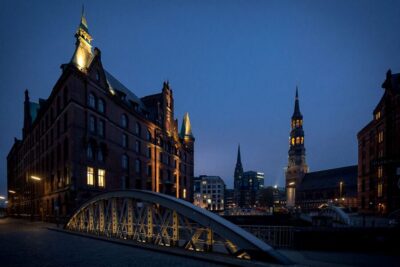
True Crime-Quiztour – kultige Tatorte & knifflige Fragen
Read our review →
Browse the lists this tour appears in