Reviewed · TOURS
Hamburg Port Promenade Tour
What makes the Hamburg Port Promenade Tour interesting is that you walk the Elbe waterfront like a map, watching how the port shaped daily life. I love the fish-trade story that connects St. Pauli Fish Market, Neumühlen, and the old warehouses turned into homes. One consideration: it runs about 2 hours and needs good weather, so plan for wind and wet pavement.
You start at Landungsbrücken Brücke, right in the busy harbor zone, and you meet your guide near public transportation. This is a private tour for your group only (up to 10), and you use a mobile ticket, which cuts down on time spent on paperwork.
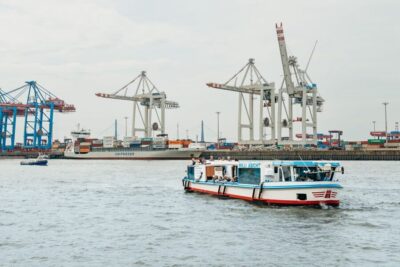
This is not a look-at-the-water-and-guess format. You get real port scenes along the way, including shipyards, cruise ship terminals, containers, canals, and even a bit of beach and residential waterfront. If you like Hamburg with grit and charm, you should enjoy the walk.
Key highlights to expect on the promenade
- Landungsbrücken to Övelgönne on foot: A straightforward route that follows the Elbe’s maritime rhythm.
- St. Pauli Fish Market in your sights: A key stop for understanding Hamburg’s seafood and trade culture.
- Neumühlen’s trade background explained: You’ll connect the neighborhood name to the city’s shipping and commerce past.
- Port operations you can actually see: Shipyards, cruise terminals, containers, and working harbor spaces.
- Piers that point to boat-trip options: You’ll spot where pleasure boats leave from along the water.
- Old and new architecture side by side: Pilots’ and captains’ houses near more modern waterfront buildings.
Why the Elbe waterfront walk works so well
Hamburg’s harbor can feel huge from a distance. The trick is to scale it down. This tour does that by taking you along the Elbe shoreline, where you can keep your eyes moving and your brain learning at the same time.
The route starts at Landungsbrücken, a core harbor area known for its busy piers and passenger action. From there, you travel toward Övelgönne, which gives you a nice sense of how the waterfront changes as you go. You are not just viewing boats, you are reading why they are there, how goods move, and how the city grew around that movement.
I also like the balance of views here. You get the scenic parts, yes. But you also get the practical parts: port infrastructure and waterfront neighborhoods that feel lived-in rather than staged.
Other Hamburg trips worth a look:
- Hamburg: Sex and Crime in St. Pauli Tour for Ages 18+
★ 4.7 · 15,447 reviews - Hamburg: 1.5-Hour Harbor and Speicherstadt Day Cruise
★ 4.6 · 14,200 reviews - Hamburg: 90-Minute Evening Lights Harbor Cruise
★ 4.5 · 7,728 reviews
Your 2-hour route, step by step on the harbor edge
You’re on your feet for about 2 hours, give or take, and the pace is built for walking between major points along the Elbe. What makes the timing feel right is that each stretch has a purpose, so you’re not just passing by scenery.
1) Landungsbrücken: where Hamburg turns outward
Landungsbrücken is where the harbor shows its public face. It’s the kind of place that feels like a gateway, with piers and passenger areas that connect people to ships, day trips, and harbor activity.
Even before you reach any big landmark, you’ll start learning how this port area functions as a hinge between Hamburg and the world. The tour frames the harbor as Germany’s gateway to the world, and you’ll see why that phrase makes sense when you’re standing where ships and services meet.
A small practical tip: this is an active harbor zone. Give yourself a minute to settle in at the start before you start photographing everything. Your eyes adjust fast once you’re anchored at the right viewpoint.
2) St. Pauli Fish Market area: seafood culture with real history behind it
As you move along the Elbe, you’ll see the St. Pauli Fish Market. This matters because it’s not just a quirky sight. It’s tied to the fish trade that helped shape Hamburg’s identity.
What you’ll learn here is the logic of the place: why seafood commerce mattered, how the port supported it, and how the market fits into the larger maritime story. If you care about food culture, this is where the walk starts becoming personal, because you can connect trades to what ends up on plates.
If you want a snack, this is the kind of spot where you might find local seafood or related traditional options nearby. You’ll be close to the energy of the market area without necessarily turning the tour into a long food stop.
Another way to spend a few hours in Hamburg:
- Hamburg: 2-Hour XXL Port of Hamburg Cruise Tour
★ 4.7 · 6,979 reviews - Hamburg: Line A Sightseeing Hop-On Hop-Off Bus Tour
★ 4.6 · 6,958 reviews - Hamburg: Elbphilharmonie Plaza Guided Tour
★ 4.7 · 5,882 reviews - Hamburg: Hamburg Dungeon Admission Ticket
★ 4.7 · 5,745 reviews
3) Neumühlen: the neighborhood name as a clue
One of the most useful moments in this walk is when Neumühlen comes into the conversation. The neighborhood name points back to the city’s trade history, especially around fish and shipping.
On this stretch, you can think of the tour like a guided walk through layers. You are seeing water views, but your guide is also helping you connect the past to what you see today. You’ll notice how the harbor’s commercial past left traces, even when the buildings changed use.
A good sign of whether you’ll enjoy this part: if you like learning how cities got their names and why old warehouses became something else, you’ll get a lot from it.
4) Old warehouses and factory buildings turned into neighborhoods
Hamburg has a habit of reusing structures. Along the waterfront, you’ll see shops in former factory buildings and old warehouses that have been transformed into flats.
This is one of my favorite kinds of tourism lessons because it’s practical. Instead of just admiring architecture, you’re understanding the economic shift: from heavy industry and trade to mixed modern life. That helps you look at the waterfront differently once the tour is over.
Potential drawback: some portions can look industrial up close. If you want only pretty scenery, you may need to adjust expectations. But if you like realism, the transformation story is exactly what makes the walk worthwhile.
5) Pilots and captains houses, plus the modern waterfront
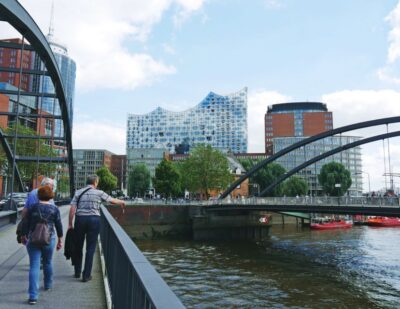
The route also highlights an interesting contrast: contemporary architecture alongside older pilots’ and captains’ houses.
That juxtaposition does more than look cool in photos. It shows how maritime work created social layers. People who guided ships and managed journeys were part of a system, and their homes often ended up near the routes and facilities they supported.
This is a great section for slow walking and letting your guide point out what to notice. Pay attention to shapes, materials, and the way buildings face the water. With a little guidance, the waterfront starts to feel like a readable timeline.
6) Piers and boat-trip start points: the harbor in motion
Along the way, you’ll see many piers that act as starting points for pleasure boat trips up and down the Elbe. Even if you don’t take a boat ride, these piers give you an immediate sense of what’s available in Hamburg beyond ferrying cargo.
It also helps you connect dots. You’ll look at the boats differently when you realize the same water that moves goods also carries visitors and day-trippers.
If you are planning your own day on the Elbe later, take note of these piers. It can save you time when you’re planning where to go next.
7) More port scenes: canals, shipyards, terminals, containers, and beachy corners
Expect the walk to include scenes beyond sightseeing. You might see canals, shipyards, cruise ship terminals, container areas, and even residential waterfront sections with beach-like space.
This is a big part of why the tour feels educational and entertaining. You’re not only learning about old trade. You’re seeing the modern port at work, which makes the maritime story feel current instead of frozen in the past.
If you come from a place where ports are hidden behind fences and distance, this can be a wake-up moment. Here, the port is part of the city’s everyday geography.
What you actually learn about Hamburg’s maritime trade
The big theme is how Hamburg’s sea connection shaped neighborhoods, jobs, and daily life. The tour ties together fish trade, shipping infrastructure, and the physical changes to buildings along the Elbe.
You’ll get explanations that connect:
- Fish commerce and harbor logistics: why fish trade mattered and how it linked to the port.
- Neumühlen’s trade clue: how the neighborhood name fits the wider history of commerce on the water.
- Industrial buildings repurposed for modern living: shops and apartments where warehouses once handled work tied to shipping.
This matters because it upgrades your sightseeing. You stop treating Hamburg as a set of attractions and start seeing it as a working city with a waterfront identity. Even if you only spend a day or two in town, you’ll leave with a clearer picture.
And since the tour is private for your group, you can ask simple questions as you walk. It’s the kind of experience where clarification pays off fast.
St. Pauli Fish Market and food culture, with smart expectations
St. Pauli Fish Market is a visual anchor on the route. But it’s also an idea anchor: it helps you understand why people moved to the harbor and why seafood commerce became a key part of the city’s story.
Here’s the useful way to approach it. Don’t only treat it as a photo stop. Use it as a reference point for the broader trade narrative the guide is building across the walk. When you later eat in Hamburg, you’ll know what you’re tasting in a bigger context.
If you plan to buy food, keep it flexible. This tour runs around 2 hours, so you’ll want snacks that don’t turn into a time sink. Think quick bites over sit-down meals during the walk.
Port infrastructure views you’ll remember because they feel real
One of the most memorable parts of this kind of harbor walk is seeing how the port looks up close. In Hamburg, you’re in the middle of a working system, and that changes the way everything feels.
You may notice:
- Shipyards and cruise ship terminals, which show different kinds of maritime traffic.
- Containers, which remind you how global trade moves through the same water.
- Canals and waterways, which make the city feel connected in layers.
- Residential and beachy corners, which prove the port is not only for industry.
That mix is the practical magic. You get the sense of a city that uses the waterfront in multiple ways at the same time.
Price and value: a private tour that can be a bargain for groups
The price is $357.90 per group, up to 10 people. That structure is great if you’re traveling with friends, a family unit, or anyone who likes to stick together rather than join a large group tour.
Here’s the value logic I’d use. Since the tour is private and only your group participates, you’re not paying per person on the fly. Your cost can effectively shrink when more people share the group rate.
Also consider the time. At about 2 hours, it’s long enough to learn something real and walk a meaningful stretch, but short enough that it doesn’t derail a packed itinerary.
One caution: if you’re a solo traveler or a couple, the group rate might feel steep compared to public tours. In that case, the question is simple. Do you really want a private guide to focus only on your pace and interests? If yes, it can still be worth it. If no, you might consider whether you want to share costs.
Getting to Landungsbrücken Brücke without stress
Your start point is Landungsbrücken Brücke, with the address given as 320359 Hamburg, Germany. The tour is near public transportation, which is what you want in a busy harbor area.
My suggestion: arrive a few minutes early and pick a clear landmark. Ports can be confusing at first, with multiple piers and routes converging. If you want photos at the start, do that before you meet your guide so you’re not rushing.
Also, you’ll use a mobile ticket. That means you should have your phone charged and accessible. Bring a light external battery if you’re the type who takes lots of photos.
Who should book the Hamburg Port Promenade Tour
This is a strong match if you want:
- a guided walk focused on maritime trade and harbor life
- a private experience for a group of up to 10
- a route that combines food culture clues with port infrastructure sights
- a practical introduction to Hamburg’s relationship with the Elbe
It’s also a good option for people who like cities that show their work. If your idea of travel includes shipyards, terminals, and containers, this tour will make sense fast.
If your goal is only postcard-perfect waterfront photos and minimal walking, you might find the more industrial scenes less satisfying. But even then, the trade explanation helps you “get it” instead of just tolerating it.
Should you book this Hamburg Port Promenade Tour?
I think you should book it if you want a focused, private, 2-hour walk that explains what you’re seeing, not just where you should stand for a picture. The combo of Elbe views, St. Pauli Fish Market, Neumühlen trade context, and modern port scenes is a smart way to understand Hamburg quickly.
Book it with extra confidence if you’re traveling with a group that can split the $357.90 group price and you’re able to handle a brisk walk along the water. Skip or reschedule if you know you’ll struggle with weather, since the experience requires good conditions.
FAQ
How long is the Hamburg Port Promenade Tour?
It lasts about 2 hours.
What is the price, and how many people can be in a group?
The price is $357.90 per group, for up to 10 people.
Where does the tour start?
The tour starts at Landungsbrücken Brücke, 320359 Hamburg, Germany.
Where does the tour end?
The tour ends in Hamburg.
Is this a private tour?
Yes. Only your group participates.
Do I need a printed ticket?
No. It’s a mobile ticket.
Is the meeting point near public transportation?
Yes, the start location is near public transportation.
What will I see during the walk?
You’ll stroll along the Elbe from Landungsbrücken to Övelgönne, see the St. Pauli Fish Market, and pass port-related areas such as shipyards, cruise ship terminals, containers, piers, and nearby waterfront scenes.
Is good weather required?
Yes. The experience requires good weather, and if it’s canceled due to poor weather, you’ll be offered a different date or a full refund.
Can I cancel for free?
Yes. You can cancel up to 24 hours in advance for a full refund.
Recently added around Hamburg
- Hamburg Private Food Tours with a Local: 100% Personalized★ 5.0 · 3 reviews
- The Beatles on St. Pauli★ 5.0 · 3 reviews
- Short walk St. Pauli – the St. Pauli quickie★ 5.0 · 3 reviews
- Private Tour: Hamburg St Pauli Nightlife District★ 3.5 · 3 reviews
- Private Tour: Speicherstadt and HafenCity Walking Tour in Hamburg★ 5.0 · 4 reviews
- Hamburg: Safari Tour in St. Pauli★ 5.0 · 3 reviews
- Private Hamburg rickshaw tour for 2 people★ 5.0 · 3 reviews
- Hamburg Like a Local: Private and Personalized Experience (3hrs)★ 5.0 · 3 reviews
Tours, compared.


In the Footsteps of “Olivia” Reeperbahn Tour
Read our review →