Reviewed · PRIVATE
World War 2 Hamburg Private Guided Tour
Hamburg’s World War II story is more interesting than the usual factory-and-flyover version, because it starts earlier and keeps going into how the city remembers today. I like that this is a private guided format, so you can ask questions in real time instead of feeling rushed. I also like that you’ll see former bunkers and major memorial stops, not just plaques from the sidewalk. One consideration: the sites are tied to executions, deportations, and terror, so you should be ready for heavy material, even with the outdoor walking pace.
This is a smart way to get your bearings through the city, with a route that moves from WW1 and the interwar years to Nazi power, wartime deception, colonial legacies, and postwar reckoning. The tour runs about 5 hours, offered in English, and you get a mobile ticket for easier check-in. Since it’s private for a group up to 15, you can tailor the pace a bit, but that also means you should wear comfortable shoes and plan for standing and walking.
For a lot of people, the best part is the guide. In past tours, guides named Sarah and Evan have been praised for tailoring the explanation to mixed ages and interests, while keeping the facts clear and the questions welcome. If you want a finish in a convenient spot, you can also request a drop-off, otherwise the route ends at the WW2 bunker on Feldstraße.
Key highlights worth planning around
- A private guide keeps you on track, so you don’t spend energy trying to find each site
- WW1 through postwar memory, not a single-era “greatest hits” tour
- Bunkers and repurposed wartime buildings, including a skyline-garden reuse on Feldstraße
- Planten un Blomen’s dark wartime uses, from executions to a displaced persons camp
- Jewish Hamburg and key 1933-1938 events, including Kristallnacht and book burnings
- A well-chosen “after the war” finish at St. Nikolai Memorial with museum and tower access
Why Hamburg’s WWII story feels different on a private route
Hamburg is a city you can walk through for days and still feel like it has layers. This tour leans into that, connecting the years that set the stage to what happened during the war, then to how the city keeps memory in public space.
What makes the private format practical is simple. Instead of counting on a big group and a strict script, you can ask follow-up questions when something clicks or when you need clarity. And because the stops are spread across different neighborhoods, having someone who knows the route lets you spend your attention on the meaning of the places, not on navigation.
There’s also real value in how the tour handles context. One stop isn’t just a location, it’s a prompt. You learn why the city’s institutions mattered, how propaganda shaped behavior, how war reshaped daily life, and how remembrance changed after 1945. That is what turns a list of sites into understanding.
More Hamburg days worth comparing
- Hamburg: Elbphilharmonie Plaza Guided Tour
★ 4.7 · 5,882 reviews - Hamburg: Chocoversum Guided Tour with Tastings
★ 4.7 · 2,443 reviews - Hamburg: St. Pauli Highlights Guided Tour with Beer for 18+
★ 4.7 · 2,353 reviews
The route, in plain terms: from interwar collapse to wartime terror
The itinerary follows a logical storyline. You begin with the interwar years, then move into how political and judicial systems broke down in the 1930s. From there, the tour shifts into wartime infrastructure and citywide coercion, including bunkers, deception tactics meant to protect leadership areas, and the way terror spread through public spaces.
You’ll also hit a thoughtful element that many tours skip. Hamburg’s WWII story isn’t only about what happened in Hamburg during the war years. The route includes colonial-era context through Afrikahaus, because segregation and racial thinking did not appear from nowhere. It helped create the mindset that enabled later crimes.
Finally, the tour closes with remembrance. St. Nikolai Memorial is not just somber, it’s also a place where you can see how postwar Germany chose reconciliation and public mourning, including memorial links beyond Germany’s borders.
Stop 1: Laeiszhalle and the interwar setup you’ll carry the whole day
Laeiszhalle is where the tour starts by resetting the timeline. Rather than jumping straight to bombs and bunkers, you look at the interwar period and the forces that shaped the 1920s and 1930s: the lesser known angles of WW1, the hyperinflation years, the social stress that followed, and the rise of antisemitism tied to propaganda and scapegoating.
The practical value of starting here is that you’ll recognize themes later. When you reach Nazi-era public power sites, you’ll understand why anger and fear found an audience. When you see memorials tied to book burning and political opposition, you’ll see it as part of a broader campaign against plural voices.
This stop also tends to set the tone for how the rest of the day will feel. It’s not graphic, but it gives you the “why” that makes the darker stops easier to process. It’s also listed as a free ticket stop, so it’s a low-friction start.
Stop 2: Sievekingplatz and the 1930s breakdown of Hamburg’s systems
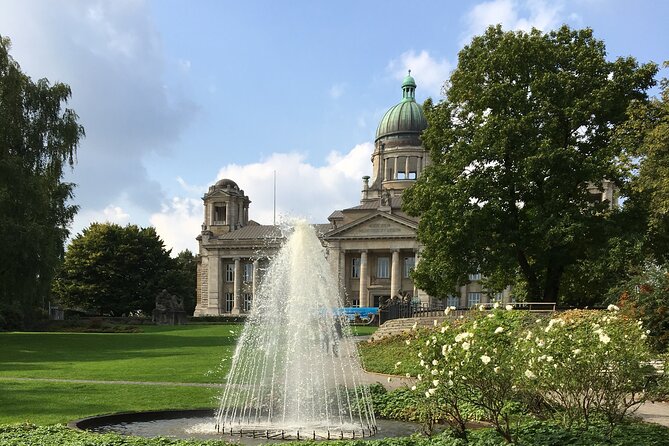
At Sievekingplatz, you focus on the downfall of Hamburg’s judicial and political system in the 1930s and the consequences that followed. This is one of those moments where the tour shifts from events to mechanisms.
Why this matters: the crimes and terror of WWII were not random. They were enabled by decisions and structures that removed limits, weakened accountability, and made persecution easier to execute. When you understand that, the later war-era scenes become less like isolated horror stories and more like outcomes of deliberate steps.
The time here is short, about 15 minutes, but the payoff can be big. Even a brief stop can give you a mental framework for what you’ll see next, especially when you reach memorials and public institutions used by Nazi power.
Another way to spend a few hours in Hamburg:
- Hamburg: Sex and Crime in St. Pauli Tour for Ages 18+
★ 4.7 · 15,447 reviews - Hamburg: 1.5-Hour Harbor and Speicherstadt Day Cruise
★ 4.6 · 14,200 reviews - Hamburg: 90-Minute Evening Lights Harbor Cruise
★ 4.5 · 7,728 reviews - Hamburg: 2-Hour XXL Port of Hamburg Cruise Tour
★ 4.7 · 6,979 reviews
Stop 3: Feldstraße, the bunker, and the awkward miracle of repurposing
Feldstraße is marked today by one of the largest bunkers built during WWII. The tour notes that this structure is currently being repurposed as a skyline garden. I love a stop like this because it forces a contrast that’s hard to ignore. The same physical mass that once served wartime protection can become a place for calm and views.
At the same time, the tour keeps you from romanticizing the present. You’re asked to hold two things at once: the reuse tells you something about survival and change, while the original function tells you what people built and planned for when terror was normal.
This segment is brief, around 15 minutes, but it’s visually memorable. If you want a photo, focus on the setting and the scale rather than only the modern garden use. The scale is the message.
Stop 4: Planten un Blomen, Hamburg’s scenic park with a hidden wartime past
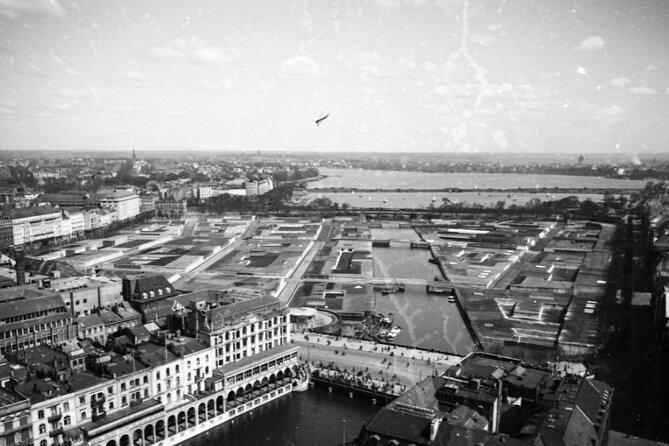
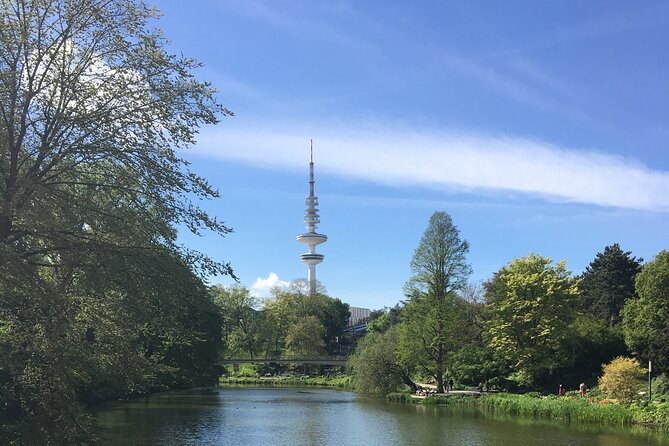
Planten un Blomen is now one of the city’s most scenic areas, which is exactly why it can hit hard. During WWII, it was used as a central location for executions. The tour also points to other uses tied to propaganda, a human zoo, and a displaced persons camp.
That mix of purposes matters. You’re not just learning about a single crime, you’re seeing how the Nazi system used public space. A park that looks peaceful in daylight was part of a machinery of humiliation and coercion.
The tour gives you about 30 minutes here, and that time is enough to slow down and absorb the contradiction. If you’re sensitive to heavy topics, it helps that you’re walking outdoors, with room to take breaks. If you’re with family or mixed ages, a good private guide can pace the explanation based on how people are taking it in.
Everything here is listed as free admission, which makes it an easy stop to include even if you’re watching costs.
Stop 5: Kriegerdenkmal am Dammtordamm and how remembrance changes by era
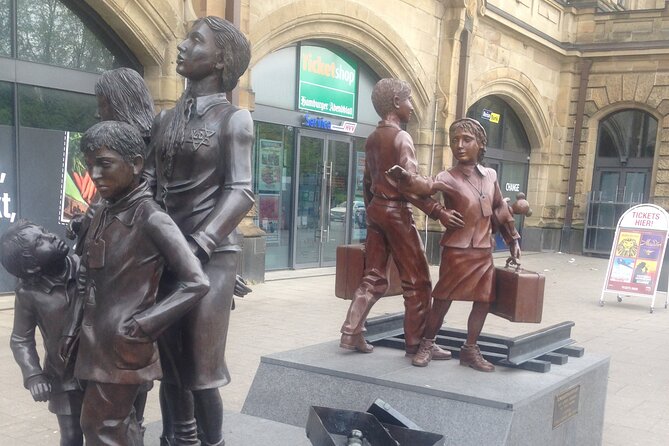
Next comes Kriegerdenkmal am Dammtordamm, a location shaped by five different war memorials from different periods. This is one of the smartest ways to understand modern Hamburg because it shows that remembrance is not one fixed idea.
The key point is that memorials represent what a society chooses to highlight. When memorials from different eras share one place, they create a layered story of meaning, shifting narratives, and changes in public attitudes about war and loss.
The tour spends about 25 minutes here, which is plenty for you to notice details, read the messaging, and ask your guide how the symbolism evolved.
Because this stop is also free, it’s a good place to linger if you’re especially interested in public memory and the way cities teach history without classroom walls.
Stop 6: Turmbar, the “water tower” bunker clue, and Hamburg’s wartime scale
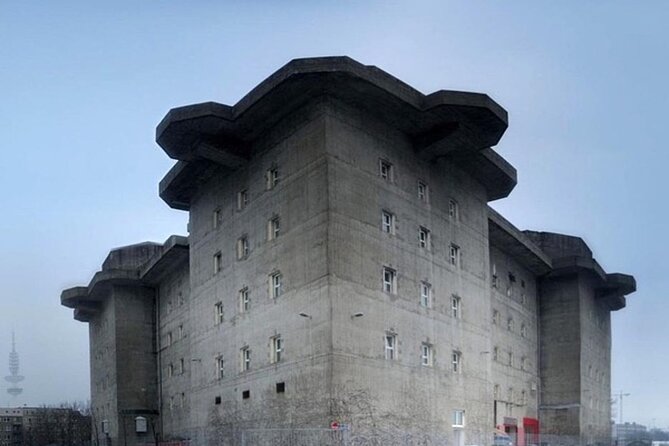
Turmbar is a quick stop, about 5 minutes, but it carries an important fact: what appears to be a water tower is actually one of the over 2,000 bunkers built in Hamburg during WWII.
That single detail can change how you see the city. It signals that bunkers weren’t rare special structures, they were part of the urban fabric. You start noticing the idea of defensive architecture and the way the war reshaped building priorities.
If you’ve ever wondered why Hamburg feels so full of built reminders, this is part of the answer. Even without entering a bunker, you get the scale of it.
Stop 7: Grindel and the Jewish Hamburg story, from everyday life to deportation
Grindel is where the tour becomes deeply personal in terms of human reality. The district once hosted a vibrant Jewish community, and the route explains how the area formed, who lived there, and what happened during the war.
The stop also names specific events and themes:
- the place tied to deported Jewish persons of Hamburg
- Kristallnacht in 1938
- book burning in 1933
- the Born Synagogue
- the Talmud Torah School
This is a long stop, about 1 hour, because it needs space. I like that the guide doesn’t treat it as a single tragedy headline. Instead, you get a thread from community life to targeted persecution and the brutal escalation that followed.
The practical benefit for you: when you later see memorials and remembrance markers, your brain already has names and context. That makes the public sites feel less abstract.
Stop 8: Jungfernstieg and the decoy city center idea
At Jungfernstieg, the tour covers an attempt by Hamburg to build a decoy city center to avoid bombings. This is a different kind of wartime story, less about who suffered and more about how authorities tried to protect key areas through deception.
It’s also a useful reminder that war isn’t only what happens at the front. It’s information management, fear management, and making the enemy guess wrong.
This stop is short, about 10 minutes and free admission, so think of it as a “plot twist” segment. It adds variety without derailing the main story.
Stop 9: Rathausmarkt and Nazi use of power symbols
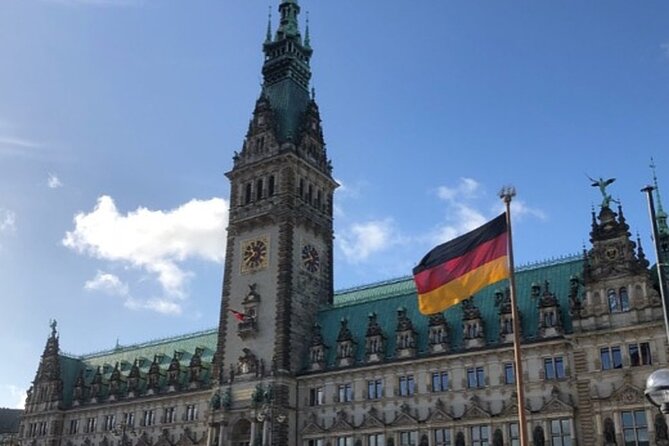
Rathausmarkt is the square linked to the city’s town hall and the seat of power in Hamburg. Here, the tour explains how the Nazi party used the space during WWII.
This stop includes several memorial threads:
- memorials for political opposition
- memorials connected to book burnings of 1933
- memorial references to WW1 propaganda in Nazi Germany
The value is that you’re standing in a place where authority was staged. You can connect the idea of propaganda to how power looked and sounded in public. It’s not just history, it’s theater, and the square helps make that clear.
The time here is about 40 minutes, which lets you read and compare messaging rather than rushing through.
Stop 10: Afrikahaus and how colonial history connects to WWII crimes
Afrikahaus is a leftover from the German colonial period. The tour explains why this often forgotten chapter matters for understanding racial segregation and genocide in WWII Germany.
I appreciate this stop because it prevents a common mistake: treating Nazi crimes as if they started in 1939 with the invasion. The tour frames racism as something that had a longer career, with ideas and practices that could be repurposed into new forms of terror.
This stop is about 15 minutes and free, but it can provoke a lot of questions. If you like to understand systems, not just events, you’ll enjoy how this segment ties cause and consequence together.
Stop 11: St. Nikolai Memorial, the 1943 ruins, and reconciliation you can see
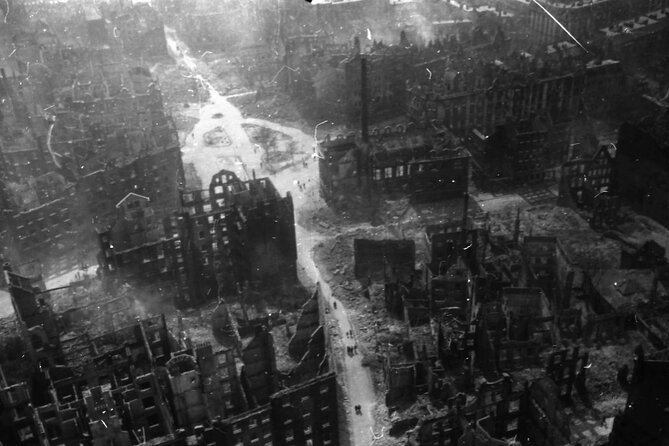
The finish is St. Nikolai Memorial, a church memorial to victims of war and the rule of terror. The building is the remains of the former church that was bombed along with much of the city in 1943.
What you’re shown here includes memorials to:
- the bombing of Hamburg
- victims connected to the concentration camp Neuengamme
- postwar reconciliation between Germany and the UK
There’s also a museum and a tower with an elevator for city views. Admission to these parts is not included, so plan extra time and budget if you want that perspective from above.
This ending works well because it shifts the emotional temperature. You move from wartime tactics and persecution to public mourning and the question of what comes after. It’s also a good place to ask final questions, since you’ve already built the context.
In real life, this stop can also feel like a reset button. You get to look at how a city chooses memory in stone and glass, not just in textbooks.
Price and logistics: what you’re really paying for
The price is $714.85 per group, up to 15 people. That sounds pricey until you do the math. If you fill the group, it’s roughly $48 per person for a guided half-day tour covering many major sites. If your group is smaller, the per-person cost goes up, but private tours still often stay worth it when you compare what you’d pay for separate entry fees, transit stress, and guide time.
The biggest value is the private attention. You won’t be stuck listening to answers that don’t fit your questions. And because the route has multiple time-stamped stops, a good guide helps you keep a smooth pace.
Practical notes that help you enjoy it:
- You’ll need moderate physical fitness, because you’ll be walking and standing at multiple outdoor sites.
- It’s in English, so you’ll get full context without translation gaps.
- It’s near public transportation, which matters if you want to arrive early or grab a snack afterward.
- You get a mobile ticket, so you should still keep an eye on your phone battery.
One more small perk: while the tour ends at the WW2 bunker on Feldstraße, drop-off can be arranged upon request, which can save you time on your schedule.
Who this Hamburg WWII tour suits best
This is a strong fit if you want your Hamburg WWII history to have structure. It works well for:
- couples who like history but don’t want to piece it together alone
- families with mixed ages who benefit from a guide tailoring pace and explanations
- visitors who want to ask questions instead of reading plaques only
- anyone interested in how memory is built, not just what happened during the war
If you only want a quick overview, this might be too heavy and too detailed for your taste. But if you’re the type who likes to connect causes to outcomes, you’ll appreciate the way each stop builds on the last.
Should you book this private Hamburg WWII guided tour?
I think you should book it if you care about context and want a guide to help you connect the dots across the whole era. The combination of bunkers, memorials, and major neighborhood stories makes it far more than a sightseeing loop.
It’s also a good choice if you value private pace. Guides like Sarah and Evan have been praised for adjusting to the needs of real groups, including multi-generation visits, which is exactly what you want on a topic that benefits from thoughtful pacing.
Just go in with the right expectations: this tour covers executions, deportations, and terror. If that’s what you want to understand respectfully, you’ll leave with a clearer sense of Hamburg, and a better grasp of how the city chose to remember.
FAQ
How long is the World War 2 Hamburg private guided tour?
It runs about 5 hours.
Is the tour offered in English?
Yes, it is offered in English.
How many people can be in a private group?
The group can include up to 15 people.
Where does the tour start and end?
It starts at Denkmal für die Gefallenen beider Weltkriege, Schleusenbrücke 1, 20354 Hamburg, and ends at Hamburg BUNKER, Feldstraße 66, 20359 Hamburg.
What sites will we visit during the tour?
You’ll visit multiple WW2 related places and memorials, including the former bunkers on Feldstraße and stops such as Planten un Blomen, Rathausmarkt, Grindel, Afrikahaus, and St. Nikolai Memorial.
Are any admissions included?
All listed stops show free admission tickets except St. Nikolai Memorial, where the museum and tower are admission not included.
Will I be able to ask questions during the tour?
Yes. Since it is private, you can ask questions throughout the experience.
Is the tour cancellable for a refund?
Yes. Free cancellation is available up to 24 hours before the experience starts.
Recently added around Hamburg
- Hamburg Private Food Tours with a Local: 100% Personalized★ 5.0 · 3 reviews
- The Beatles on St. Pauli★ 5.0 · 3 reviews
- Short walk St. Pauli – the St. Pauli quickie★ 5.0 · 3 reviews
- Hamburg: Safari Tour in St. Pauli★ 5.0 · 3 reviews
- Private Tour: Hamburg St Pauli Nightlife District★ 3.5 · 3 reviews
- Private Tour: Speicherstadt and HafenCity Walking Tour in Hamburg★ 5.0 · 4 reviews
- Private Hamburg rickshaw tour for 2 people★ 5.0 · 3 reviews
- Hamburg Like a Local: Private and Personalized Experience (3hrs)★ 5.0 · 3 reviews
Private, compared.

Your private 3-hour Hamburg driving tour with a former policeman
Read our review →
Private 2-Hour Hamburg Highlights Walking Tour
Read our review →
Hamburg Private Walking Tour with a Local: Icons & Hidden Gems
Read our review →