
Reviewed · MUSEUMS & ATTRACTION TICKETS
Hamburg: Museum of Illusions Ticket
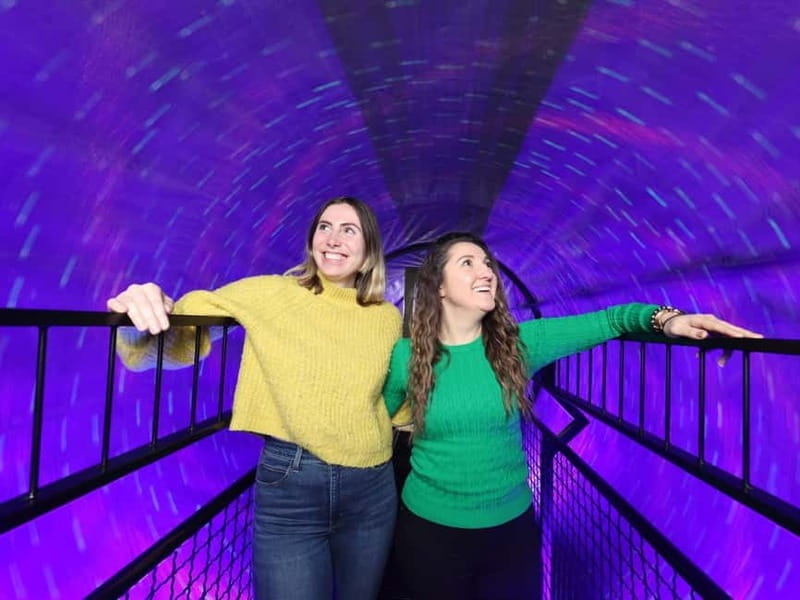
Hamburg’s Museum of Illusions is interesting because you are not just looking, you are participating. With 50+ interactive exhibits, you walk through mind-bending setups that make your brain question what your eyes are telling you.
I really like the hands-on feel of the experience, especially the moments where you can try gravity-defying poses and trick your body’s scale. One drawback to keep in mind is that the space can feel a bit compact and some areas can lead to slower, wander-around browsing if you are traveling with energetic kids.
Key highlights before you go

- 50+ interactive exhibits built around optical tricks and perception games
- Brain Gym puzzle-style activities that get you thinking with others
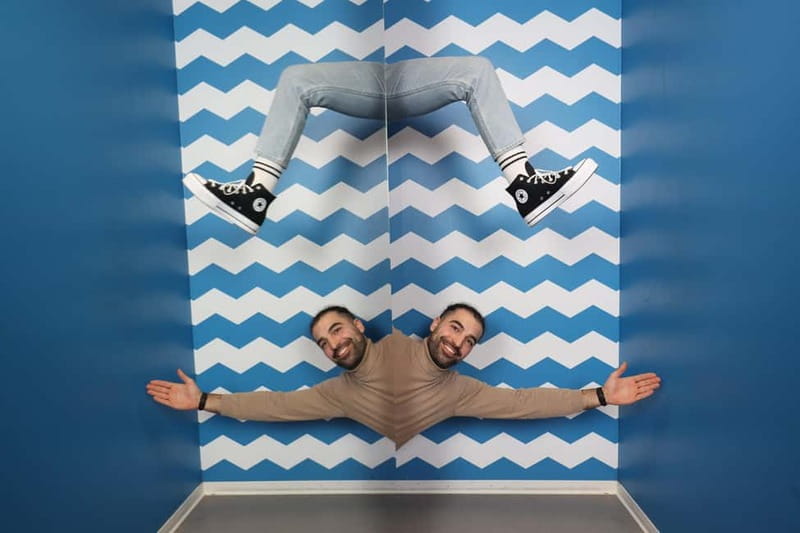
- Gravity and body tricks where you take part in the illusion
- Photo moments designed for fun pictures, with a camera on your checklist
- Family-friendly pacing that works for different ages, if you manage movement
- Skip the ticket line so you can get started sooner
Museum of Illusions Hamburg, 50+ exhibits that trick your senses

This is the kind of place where your “reality settings” get tested. You walk in expecting physics to behave normally, then the museum gently proves it won’t, at least not the way you think it will.
You will spend your time moving from station to station, trying to figure out why certain scenes look impossible. Some exhibits are very visual, while others rely on timing, angles, or your own position in the room. It is a simple formula, but the execution keeps you busy longer than you might guess.
The big win is that the exhibits are interactive. Instead of standing still and reading labels, you can step into the effects, tilt your perspective, and see what happens when your brain tries to “fix” the image.
And yes, a lot of it is built for photos. Bring a camera because many of the best moments are the ones you recreate in real time.
More museum and attraction tickets in Hamburg:
- Hamburg: Hamburg Dungeon Admission Ticket
★ 4.7 · 5,745 reviews - Hamburg: Ticket to the Panoptikum Waxworks
★ 4.3 · 2,489 reviews - Hamburg: International Maritime Museum Entrance Ticket
★ 4.7 · 547 reviews
Planning your visit, timing windows, and how long to plan
Your ticket is valid for 1 day, but you still want to choose the right start time when you book. That matters because the museum is popular and the best experience comes from having enough time to try things without rushing.
How long should you plan? With 50+ exhibits and a Brain Gym area, you can easily lose track of time. If you are traveling with kids, build in extra minutes because some stations are more hands-on and they may want to repeat the same trick from different angles.
If you are the type who likes to see everything in one go, try to arrive ready to move. If you prefer a slower visit, you can still do it, but you will want to accept that the museum is not an all-day campus. It is more like an action-packed circuit.
Also, because you’re doing a lot of “try this, look again, take a picture,” you will get more value when you dress for comfort. Think walking shoes and clothes that let you move easily, especially for the gravity and body-scale style illusions.
Self-guided itinerary, a smart route through Brain Gym and the main halls
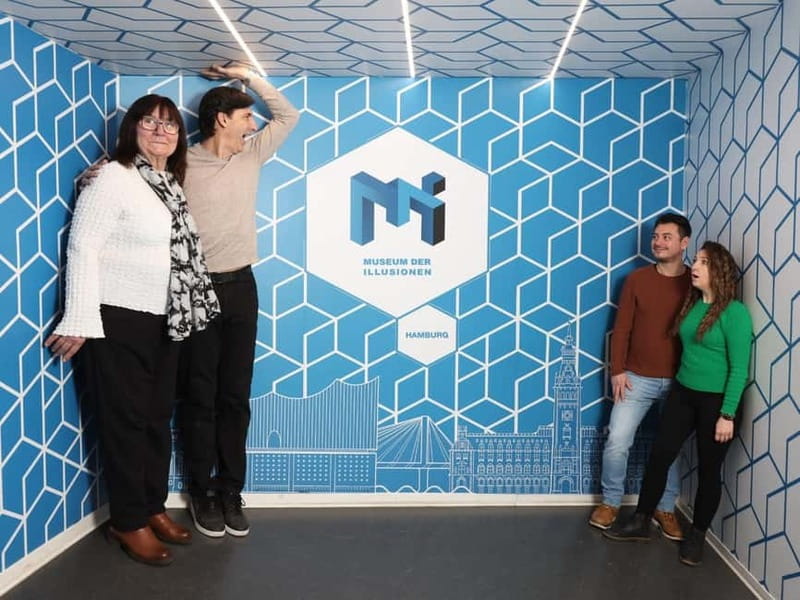
There is no stated guided tour route here, so you will create your own flow. That is part of the fun, but it helps to have a rough plan so you do not miss the best parts or get stuck in slow-moving spots.
A great way to start is with Brain Gym, because it sets the mood. If the puzzle games are running, it is a good early stop before you get distracted by the bigger visual illusions. You can solve dilemmas together, then shift into physical tricks with a clearer head.
After that, move into the stations that are more about body perception and impossible-looking situations. This is where you will likely find the setups like floating-head style effects, optical puzzles that depend on your viewpoint, and the fun “your body as the subject” moments.
Then, save time for the rooms where your brain really struggles to measure space. The museum includes scenarios like infinite rooms, which are designed to make distances and depth feel confusing. Those are best when you take your time and try a couple positions.
Finally, leave a little wiggle room for repeats and photos. Many exhibits look different after you try them from another angle, and the camera moments are often the ones you want to get right before you move on.
Brain Gym puzzles, why the games are more than a break
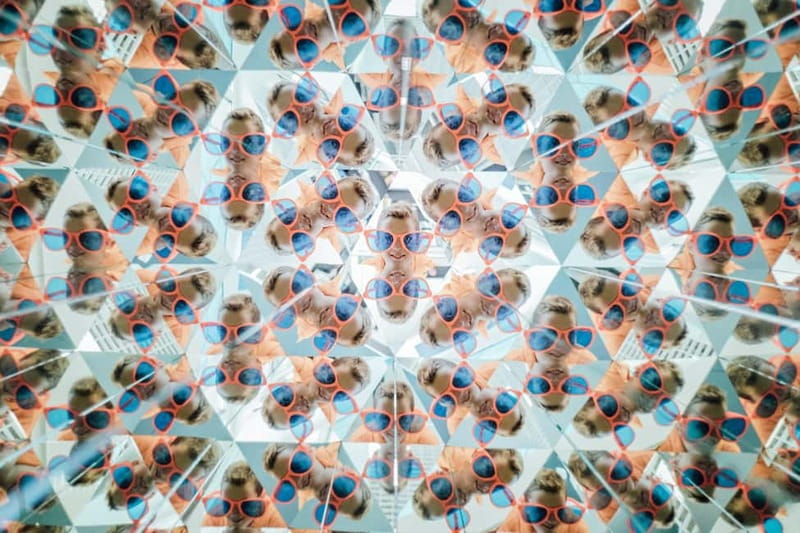
Brain Gym is one of the spots that makes this museum feel like more than a set of photo backdrops. The idea is simple: you do dilemma games and brain puzzles, and that gets your attention back on how your perception works.
These are the types of activities that work well for groups, too. If you are traveling with another adult or with kids who like challenges, you can turn it into a friendly competition: who spots the pattern faster, who guesses right on the first try, who notices the key visual detail.
This section is valuable because it slows the visit down in a good way. After you’ve spent time dealing with optical tricks that confuse your eyes, a puzzle-based brain station helps you make sense of why your reactions happen.
Also, the Brain Gym area gives you a place to rest your feet for a few minutes. The rest of the museum is active, with a lot of standing, posing, and re-trying. Having a more seated or puzzle-centered stop makes the whole visit feel balanced.
More museums in Hamburg:
- Hamburg: Entrance to the Museum Ship Cap San Diego
★ 4.7 · 467 reviews - Hamburg: RICKMER RICKMERS Museum Entry Ticket
★ 4.6 · 269 reviews - Hamburg: Emigration Museum BallinStadt Entry Ticket
★ 4.4 · 63 reviews - Ticket for the Emigration Museum BallinStadt Hamburg
★ 4.0 · 57 reviews
Gravity, ceiling tricks, and body-scale illusions you can actually try
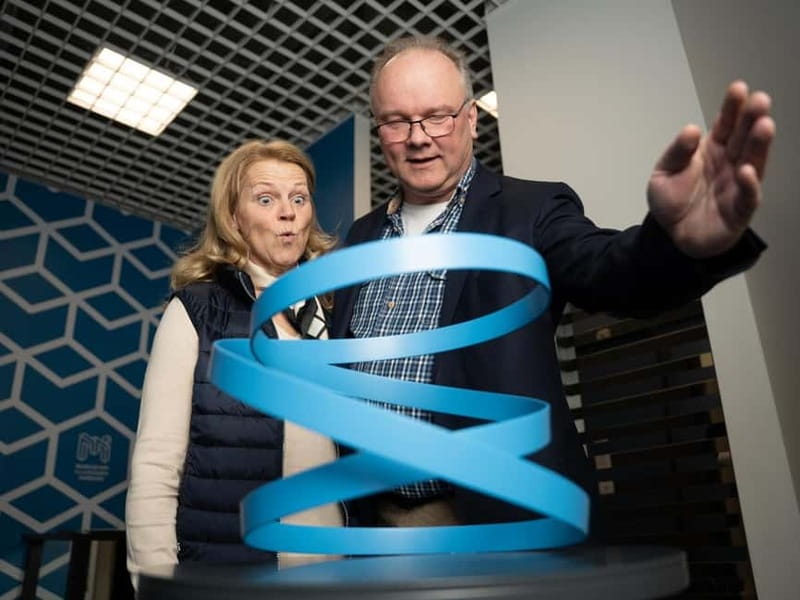
Some museums make you watch. This one makes you participate, and that is why the illusion feels stronger.
Expect you will encounter exhibits where your goal is to create a convincing effect, like posing as if you are defying gravity or finding a way to make a ceiling-walk moment look real. There are also setups designed to help you “change your size,” which is one of the most effective ways to mess with perception.
The floating-head style concept also fits this category. When your body or a prop becomes the “measurement,” your brain has less reliable reference points, so the illusion becomes harder to correct.
Here’s the practical takeaway: do not just do the trick once. Try it again with a small change in position. Most illusion-based exhibits are sensitive to angle, distance, and how your camera frames the scene.
If you are visiting with kids, this is where the museum can feel especially magical. Adults may understand the basic trick faster, but the fun is still in seeing how the same setup can produce different results depending on how you stand and look.
Infinite rooms and optical puzzles, the difference between seeing and understanding
The museum includes experiences like infinite rooms, and they are a classic example of why your brain can be tricked without you realizing it. Infinity-looking spaces are not just about lighting, they are about how perspective lines and repetition convince you you are seeing a continuous depth.
For you, the best approach is to treat these rooms like a visual lab. Pause, look for the repeating pattern, then move slowly while keeping your eyes on the key lines. When you switch from quick scanning to deliberate looking, you start to understand why the illusion is convincing.
Optical puzzles throughout the museum are built on a similar concept. Your eyes may interpret shapes and movement in a way that feels natural, but it might not match what is actually happening in the space. That is the core point of the museum: perception is a process, not a direct feed.
If you want the most satisfaction, do not rush through the optical rooms. Give yourself a few minutes to try, fail, and then try again with a different angle. The payoff is higher when you notice the pattern instead of just being impressed by the result.
And because it is photo-friendly, you can use your camera to slow you down. Framing shots forces you to pay attention to details like edges, reflections, and the way your body blocks or reveals the trick.
Photo-friendly stations, what to bring, and how to get better pictures
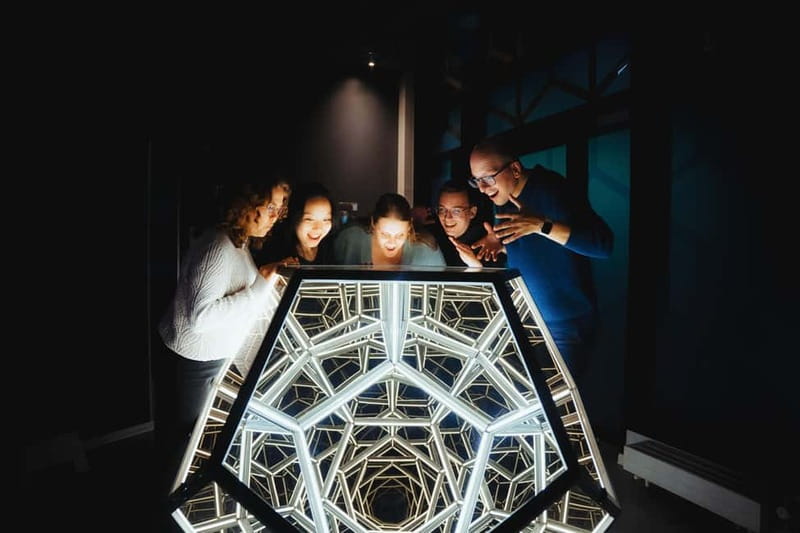
The museum specifically asks you to bring a camera, and honestly, it is hard to get the full value without one. A lot of these exhibits are designed to look best when you capture them, because you are creating a visual story: your face, your pose, and the illusion working together.
I like the way many setups invite you into the scene. That means the photo is not just a souvenir, it becomes part of the experience. You will take a first shot, then realize you can improve it with a small change, like stepping a bit closer or repositioning your feet.
Practical tip: keep your camera ready, but do not block others. If the station is busy, take one or two quick tries, then move aside so someone else can do their turn.
Also, because the museum focuses on optical effects, lighting matters. If your photos look flat, try stepping to a slightly different spot where the effect is stronger. Infinite rooms and perception scenes often show their best trick when your perspective lines line up cleanly.
If you are traveling as a family, make it a game. Assign roles: one person sets the pose, another checks the angle, and everyone gets a turn repeating the trick until the result looks right.
Pricing and value, is the ticket cost fair for 50+ exhibits
The ticket price is $17 per person for this one-day admission. For a museum built entirely around hands-on stations and interaction, this is fairly reasonable, especially if you will actually spend time trying many exhibits instead of moving through at a fast walk.
A big part of value comes from variety. You get multiple styles of illusion, from gravity and body-scale tricks to optical room effects and puzzle games in Brain Gym. That mix helps you keep interest even if one type of exhibit does not thrill you.
There is also a reduced price for people with disabilities: €13 per person. For visitors with a severe disability (B or H), one accompanying person is free. That matters because it makes the experience more achievable for families and support teams.
I also appreciate that the museum includes practical perks like skipping the ticket line. When you pay for time-based entry and want to start right away, skipping the line is one of those small things that improves the day.
If you are on a tight schedule, you might be tempted to treat this as a quick stop. I would avoid that mindset. The museum is best when you allow yourself time to experiment and repeat your favorite stations.
Accessibility, rules, and small details that affect your day
This museum is wheelchair accessible, so mobility should not stop you from enjoying the exhibits. Keep in mind that some illusions may require you to position yourself for the effect, so you may find certain stations easier than others depending on your comfort and the space around them.
A few rules also shape the flow. Pets are not allowed, and food and drinks are not allowed inside. The museum also asks you to bring a camera, so plan to rely on photos rather than souvenirs.
One more practical point: this is an interactive, family-friendly museum. That means you will likely encounter kids moving quickly, sometimes toward displays. If you want to enjoy the trick without stress, keep your eyes up and your timing flexible.
If you want the best experience, go with patience and a light plan. Do not expect a museum like a quiet gallery. Expect activity, posing, and people taking turns.
Who should book this ticket, and who may want to think twice
This is a great fit for families. The museum is designed for interaction, and that naturally engages kids and keeps adults from getting bored. If you are traveling with mixed ages, it is also a good bet because you can vary your pace by station.
It is also a solid choice for solo travelers who like hands-on experiences. Optical illusions are mentally stimulating, and the Brain Gym puzzles give you an extra layer beyond just posing for pictures.
If you are the type who hates crowds or needs a quiet environment, consider going at a less busy time. The museum’s layout can feel compact, and that can make it harder to move freely when stations get crowded.
Also consider your expectations. This is not a long, slow history museum. It is a fun, interactive circuit, and the experience is strongest when you treat it like play, not a checklist.
How to avoid the small-space crowd problem with kids
Some parts of the museum can feel small, and the experience can slow down when people wander without a plan. If you are visiting with children who run ahead, it helps to set a simple expectation early on: try one station, then move together to the next.
I also suggest choosing a route style. Either do stations in order, or pick a couple must-dos first, then fill in the rest. That reduces the chance you feel stuck watching people pass through the same spots repeatedly.
For families, use a practical timing trick. Do quick photos at each station, then return later for repeat tries once it clears. That way you get the picture moments without turning every station into a long wait.
If you prefer smoother movement, start with Brain Gym or another puzzle area and work outward. That can help you avoid the most congested visual hotspots.
Finally, remember that the illusion works best when people are spaced out enough to see the effect. So it is worth stepping aside briefly to let others finish, then jump back in when you can get your angle right.
Should you book the Hamburg Museum of Illusions ticket?
I think you should book if you want a high-interaction, rainy-day style activity in Hamburg that works for families and groups. With 50+ interactive exhibits, a Brain Gym puzzle area, and lots of built-in photo moments, it is the kind of ticket that keeps giving as you try things more than once.
I would hesitate if you need a wide, spacious museum layout or you prefer a quiet, linear experience. The setup can feel compact, and active families mean you may deal with faster movement and occasional congestion at popular stations.
If you are flexible, it becomes easy value. You pay for entry once, then you can spend your time experimenting at your own pace across many types of illusion. For many visitors, that is exactly what makes this ticket worth it.
FAQ
Where is the Museum of Illusions in Hamburg?
It’s in Hamburg, Germany (Hamburg state).
What is included with the Museum of Illusions ticket?
The ticket includes admission to the Museum of Illusions Hamburg.
How much does the ticket cost?
The price is $17 per person.
How long is the ticket valid?
The ticket is valid for 1 day. You should check availability for the starting times.
Can I skip the ticket line?
Yes, the ticket includes skip-the-ticket-line entry.
Is the museum wheelchair accessible?
Yes, it is wheelchair accessible.
What should I bring?
Bring a camera.
Are pets allowed?
No, pets are not allowed.
Are food and drinks allowed inside?
No, food and drinks are not allowed.
What are the payment and cancellation terms?
You can reserve and pay later. Free cancellation is available up to 24 hours in advance for a full refund.
Recently added around Hamburg
- Hamburg Private Food Tours with a Local: 100% Personalized★ 5.0 · 3 reviews
- The Beatles on St. Pauli★ 5.0 · 3 reviews
- Short walk St. Pauli – the St. Pauli quickie★ 5.0 · 3 reviews
- Private Tour: Hamburg St Pauli Nightlife District★ 3.5 · 3 reviews
- Private Tour: Speicherstadt and HafenCity Walking Tour in Hamburg★ 5.0 · 4 reviews
- Hamburg: Safari Tour in St. Pauli★ 5.0 · 3 reviews
- Hamburg Like a Local: Private and Personalized Experience (3hrs)★ 5.0 · 3 reviews
- Hamburg Port Promenade Tour★ 4.0 · 3 reviews
Museums & Attraction Tickets, compared.







Browse the lists this tour appears in