
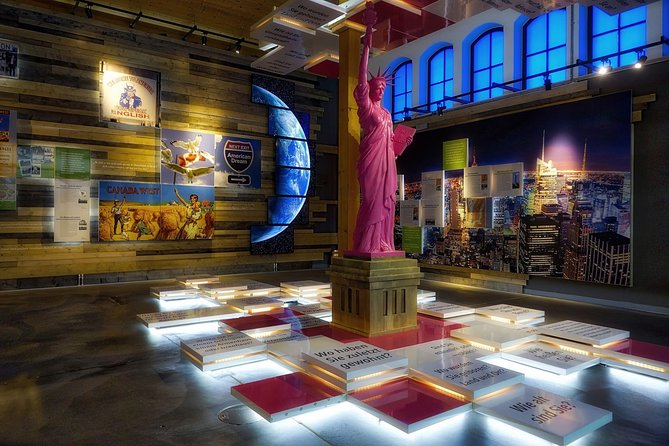
Reviewed · MUSEUMS & ATTRACTION TICKETS
Ticket for the Emigration Museum BallinStadt Hamburg
Hamburg has a special kind of immigration story, and BallinStadt turns it into something you can actually do, not just read. You spend about 1.5 hours moving through three houses on a 2,500 sqm site, using an audio guide and hands-on activities tied to real family movement.
Two things I like a lot are the interactive games (including genealogy searching) and the clear structure across four distinct eras. One possible drawback: if you expect a tight focus only on emigration from Hamburg before 1934, the museum’s wider migration focus may feel broader than you want.
Key things to know before you go

- Three houses, one story arc: you move room to room, with the experience spread across multiple spaces.
- Four eras via an audio guide: you can move at your own pace while the story shifts through time.
- Family research center tools: you can search your own genealogy as part of the visit.
- Interactive games throughout: learning is built around activities, not only displays.
- Kids have their own entry point: there is a museum rat named Jette for little ones.
- Best for curious families and history-leaning visitors: most people can participate, and it works well with children.
BallinStadt at a glance: what you get in 1.5 hours
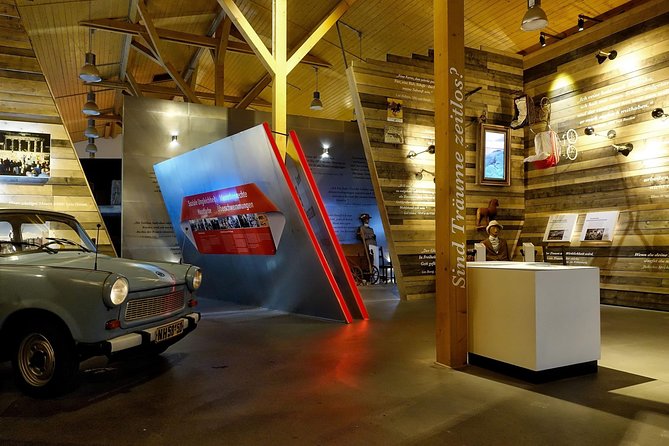
For about $15.62 per person, you’re buying admission to a museum experience built around participation. Plan for roughly 1 hour 30 minutes, give or take, and treat it like a guided self-walk: you follow the audio guide, then stop to play, explore, and answer prompts.
It’s offered in English, and the museum is set up so you do not have to be a migration expert to understand what you’re seeing. If you’re visiting with kids, the design matters because the activities are meant to keep attention, not just occupy time.
The practical upside here is that the ticket includes admission, so you can plan your day with less mental math. The other upside is value: for the price, you get multiple spaces, an audio guide, and interactive elements, not just a single gallery.
More museum and attraction tickets in Hamburg:
- Hamburg: Hamburg Dungeon Admission Ticket
★ 4.7 · 5,745 reviews - Hamburg: Ticket to the Panoptikum Waxworks
★ 4.3 · 2,489 reviews - Hamburg: International Maritime Museum Entrance Ticket
★ 4.7 · 547 reviews
Why the migration story hits differently here
This museum focuses on migration through Hamburg, with a bridge between then and now. You see emigration via Hamburg from 1850 to 1934, but you also get the bigger picture of how migration changes across four epochs.
What I find compelling is the museum’s emphasis on the reasons people left. Escape from war, hunger, and persecution shows up alongside more personal motivations like the thirst for adventure, curiosity, and the dream of a better life. That mix makes the story feel human instead of purely historical.
You might still walk away with a fact-heavy understanding, but the experience is designed to keep the emotional logic clear. The museum connects wishes and dreams with the practical realities of travel, choice, and family fate.
Touring the three houses: a museum built for movement
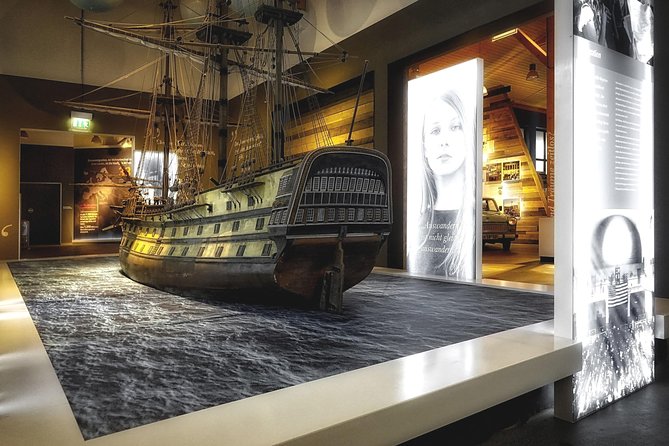
BallinStadt is spread across three houses on a large 2,500 sqm site. That layout matters because you are not stuck in one room. The museum’s format encourages you to keep moving, which makes the time limit feel manageable instead of rushed.
A key detail to know: the museum presents emigration via Hamburg through 1850 to 1934 as a core theme, and much of it sits in House 1, plus parts of House 2. The rest of the story broadens out across the museum’s overall four-epoch framework, so the experience becomes about migration as a whole.
If you like museum experiences that feel like a guided route through themed spaces, this setup works well. If you prefer one focused deep dive, you may want to pay attention to where your interests land, especially around the pre-1934 period.
House 1 and the family research center: follow your own trail
House 1 is where you get anchored in the story and the people behind it. You meet Albert Ballin, the founder connected to the former emigration halls in Hamburg, and that helps explain why Hamburg mattered as a gateway.
One of the most useful parts for many visitors is the family research center element. You can search your own genealogy, which changes the museum from a general narrative into something personal. Even if you do not find a direct match, the act of searching and thinking through documents makes the concept of ancestry feel practical.
There is also an invitation to follow in the footsteps of ancestors, which is more than a slogan. It pushes you to treat the visit like a starting point for curiosity about your own family story, rather than only a one-time stop.
A small caution: genealogy searches can slow you down. If you want the full route, consider doing the most important activities earlier in your visit so you do not run out of steam later.
More museums in Hamburg:
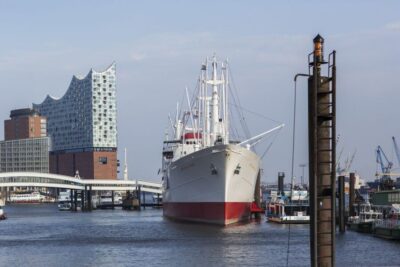
- Hamburg: Entrance to the Museum Ship Cap San Diego
★ 4.7 · 467 reviews - Hamburg: RICKMER RICKMERS Museum Entry Ticket
★ 4.6 · 269 reviews - Hamburg: Museum of Illusions Ticket
★ 4.2 · 122 reviews - Hamburg: Emigration Museum BallinStadt Entry Ticket
★ 4.4 · 63 reviews
Four eras with an audio guide: learning on your pace
Instead of one linear timeline, the museum uses an audio guide to carry you through four distinct eras. This matters because it lets you choose your pace. If one period grabs you, you can linger, and if something feels less relevant, you can keep moving.
The audio guide also helps connect what you see across different buildings. Without it, museums like this can feel like separate exhibits. With it, the eras feel like chapters you’re stepping through.
Look for the way the story shifts from motivations to consequences. The museum highlights that the reasons for migration were tied to specific pressures then, but those pressures and dreams still have parallels today. That connection is one of the reasons the story lands beyond simple dates.
If you’re traveling with kids, audio can be a blessing and a trap. It’s great for keeping them engaged, but you may need to manage volume and interruptions. Still, the museum clearly expects audio-guided self-navigation.
Interactive games and activities: the difference between watching and doing
BallinStadt leans hard into participation. You can expect interactive games plus hands-on exploration elements that pull you into the subject matter. The goal is to turn the topic into something you practice thinking through, not just something you passively observe.
For families, this is huge. It reduces the classic museum problem where kids get restless because there is nothing to do. The museum’s design gives you a reason to move, answer prompts, and keep going because the next activity is part of the path.
For adults, the interactivity often becomes a learning shortcut. You remember what you actively do, not what you only read. This is especially true when the activities connect to themes like family history and migration experiences.
If you enjoy museums that feel like a blend of storytelling and puzzles, you will likely enjoy this. If your ideal museum day is silent and gallery-only, you might find some areas feel more playful than traditional history museums.
Museum rat Jette for little ones: making space for families
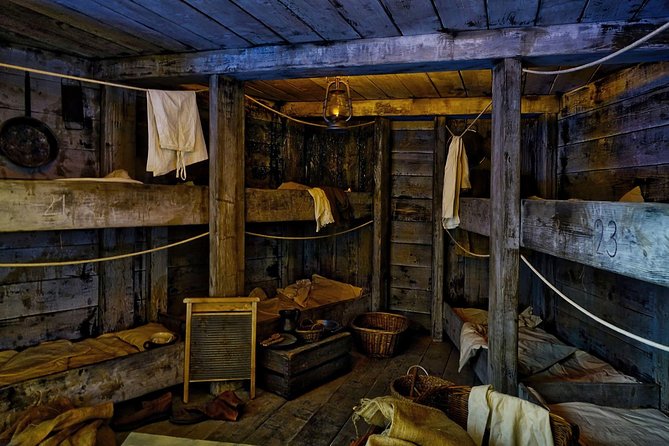
One of the most distinctive kid-friendly touches is the museum rat Jette. That detail tells you the museum has planned for young visitors, not only for adults who happen to bring children.
In practice, having a named guide character can give children a simple mission. It gives them permission to engage, touch, play, and follow along without feeling like they’re doing homework.
The best strategy for a family visit is to let your kids lead early on. Do the Jette-related or simplest interactive activities first, then move into the more story-focused parts when everyone is warmed up.
From the way the museum is designed, this is the kind of place where kids can feel included in the main narrative rather than treated as an interruption. That is exactly what makes family visits smoother.
Making the most of your ticket: how I’d pace it
This is a 1 hour 30 minutes experience, so pacing is not optional. Plan to do three things in order: start with orientation content, spend time on the family research element, then finish with the interactive games tied to the eras.
If you are serious about genealogy searching, pick a first pass plan. Do not attempt every possible path. Instead, try to get enough results to feel connected to the story, then switch gears into the museum’s core narrative.
Also, because the museum is spread across three houses, you do not want to overspend time in just one. A common mistake in multi-house museums is thinking you can always catch up later. You usually cannot.
A helpful approach: after each house, decide quickly whether you want to repeat or move on. With an audio guide and interactive points, you can get a lot even if you skip a few optional elements.
Emigration focus versus migration focus: the main tradeoff
Here’s the one consideration I would underline before you commit. The museum’s wider focus is migration as a whole, not only emigration from Hamburg. That can be a plus if you want the big picture across multiple epochs.
But if your main interest is specifically emigration via Hamburg up to 1934, note that the museum built much of that emphasis into House 1 and parts of House 2. The broader migration framing still connects to that core theme, but the total experience is not a single-track pre-1934 museum.
There was also a major refresh in 2016, when the exhibition concept was overhauled and the attention broadened. So, if you’re coming in with expectations shaped by an older version, you should calibrate a bit.
The good news: even with that broader framing, you still get the key Hamburg emigration anchor through the time period and the founder connection. You just might not get the entire museum day devoted only to that one slice.
Price and value for money in Hamburg
At $15.62, the best value argument is not just the price itself. It’s what you receive for that ticket: admission included, an audio guide experience across multiple spaces, and interactive games plus genealogy searching.
Many museums offer one or two of those. This one combines several, and that means you are less likely to feel like you paid for a quick pass through displays. The approximate 90 minutes also helps, because you can fit it into a day without it taking over your whole schedule.
If you’re traveling with kids, the value math often gets even better. Interactivity is what keeps children engaged, and BallinStadt is clearly designed for that kind of energy.
If you’re a solo adult who wants quiet, lecture-style history, your value might depend more on your tolerance for interactive elements. But for most curious visitors, it’s a solid ticket.
When to go and how to fit it into your day
The museum is open Tuesday through Sunday, 10:00 AM to 6:00 PM. For planning, that means you can usually find a slot that fits with other Hamburg sights and still keep the energy level up.
If you’re visiting in the middle of the day, you will likely have steady foot traffic. If you prefer a calmer pace for interactive activities and audio listening, going earlier in opening hours can help you move through rooms with less waiting.
Since it’s near public transportation, you can build it into your route rather than treating it as a remote side trip. That flexibility is practical in Hamburg, where you might switch neighborhoods depending on weather and time.
Should you book BallinStadt?
Book it if you want a migration museum that feels active. You’ll probably like the audio-guided four eras, the chance to use tools in a family research center, and the hands-on games that keep learning playful. The museum rat Jette is a strong sign that this is designed to work for families too.
Consider thinking twice only if your top priority is a very narrow focus on emigration via Hamburg before 1934. The museum does include that core theme, but the overall concept is broader and intentionally focuses on migration across four epochs. If you can accept that larger framing, it works well.
If you like museums where stories connect to personal questions, this is a smart use of time. Plan for about 90 minutes, bring curiosity, and let the audio guide help you connect the eras as you go.
FAQ
How long is the Emigration Museum BallinStadt Hamburg visit?
The visit is approximately 1 hour 30 minutes.
What is the price of the ticket?
The ticket price is $15.62 per person.
Is the experience available in English?
Yes, the tour is offered in English.
Is admission included in the ticket?
Yes, admission ticket is included.
How far in advance is it typically booked?
On average, it is booked about 11 days in advance.
What are the opening hours?
It is open Tuesday through Sunday, 10:00 AM to 6:00 PM.
When will I receive confirmation after booking?
You will receive confirmation at the time of booking.
Are service animals allowed?
Yes, service animals are allowed.
Is the museum near public transportation?
Yes, it is near public transportation.
Can I get a refund or change the booking if I cancel?
No. This experience is non-refundable and cannot be changed for any reason. If you cancel or request an amendment, the amount paid is not refunded.
Recently added around Hamburg
- Hamburg Private Food Tours with a Local: 100% Personalized★ 5.0 · 3 reviews
- The Beatles on St. Pauli★ 5.0 · 3 reviews
- Short walk St. Pauli – the St. Pauli quickie★ 5.0 · 3 reviews
- Private Tour: Hamburg St Pauli Nightlife District★ 3.5 · 3 reviews
- Private Tour: Speicherstadt and HafenCity Walking Tour in Hamburg★ 5.0 · 4 reviews
- Hamburg: Safari Tour in St. Pauli★ 5.0 · 3 reviews
- Private Hamburg rickshaw tour for 2 people★ 5.0 · 3 reviews
- Hamburg Like a Local: Private and Personalized Experience (3hrs)★ 5.0 · 3 reviews
Museums & Attraction Tickets, compared.





Browse the lists this tour appears in